by Facilitation Expert | May 16, 2013 | Analysis Methods
The MGRUSH meeting risk assessment method comes from answering a series of questions about a project, its stakeholders, and meeting participants. Our meeting risk assessment method is based on project risk assessment work completed by F. Warren McFarlan and James McKenney of Harvard Business School.
Meeting risk should be assessed for every major session. Use the MGRUSH Meeting Risk Assessment tool during your preparation activities.
What is Risk?
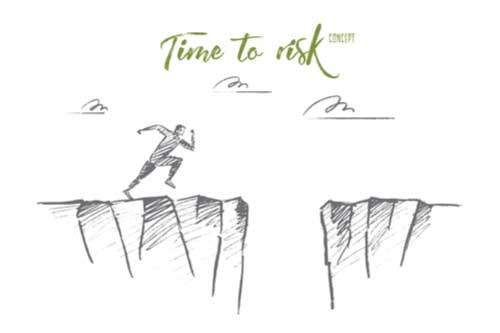
Risk derives from exposure to the following:
- Failure to achieve benefits
- Higher implementation costs
- Longer implementation time
- Performance that is less than expected
While risk is not “bad” — failure to manage risk becomes dangerous.
Meeting Risk Defined
Meeting risk appears at three layers:
Business — Project — Technique
- Business risk represents the exposure to an incomplete or late project.
- Project risk represents the likelihood of missing timelines, falling short of delivery standards, or grossly exceeding cost estimates.
- Technique risk represents the potential for major problems caused by a specific procedure or tool (ie, meeting design).
Meeting Risk Components
The Meeting Risk Assessment tool provides a method of measuring meeting risk using four vectors:
Size — Politics — Complexity — Diversity
. . . indicates the overall project size measured by effort, scope, and quantity of meetings and workshops. Project size affects planning and coordinating the required information needed to support the project. Questions cover work hours, duration, the number of sessions, the number of different types of sessions (i.e., how many different agendas are required), and whether you are located at high-level planning or detailed design in your life cycle. Therefore, the larger the project, the greater the potential risk when holding group meetings or sessions. Consequently, you need to know that size can be a significant driver of risk and thus structure your sessions appropriately (such as assigning a more experienced session leader or a team of session leaders).
. . . is an indication of the structure of the business and the volatility of the information required to support the deliverable. Therefore, it measures how difficult it will be to specify and organize the information exchange. Questions cover the newness of the topic, whether the solution is a replacement or new (i.e., evergreen), engineering or process complexity, the extent of changes required for both internal and external customers, environmental changes required, and acceptance of the methods. Because the more complex an existing system is or the newer a business is, the more difficult it is to specify its requirements. Complexity and newness often lead to incomplete or vague requirements. Consequently, adjustments may include building more thorough agendas or using prototyping for some of the needs and requirements gathering.
. . . is an indication of the political and personality climate of a project. Therefore, highly political groups tend to cloud the issues at hand and make sessions more difficult. Questions cover rating the attitudes of customers (internal or external), management, and participants; commitment of upper management; the level of controversy; past cooperation between customers and staff; the amount of flexibility allowed the participants; and stability of the organizations involved. Because highly political organizations or unstable organizations (i.e., numerous reorganizations) can make gathering requirements difficult (cutting through the ‘unknowns’) or short-lived (the participants won’t assume ownership when finished). Consequently, political risk is reduced by using the MGRUSH Professional Facilitation technique. The solution requires a politically savvy session leader and extensive planning to gain management commitment and proper resources.
-
Customer Organization (ie, heterogeneity)—
. . . is an indicator of the nature and familiarity of the organization. Furthermore, diversity looks at the participants’ ability to cooperate with each other and the logistics involved in getting everyone together. Questions cover the number of departments, the number of participants, the location of participants (geographical, domestic, and international), their prior experience working together (if any), and the knowledge of both the participants and the project team. Because, if an organization is cooperative and has few political axes to grind, yet is located around the country and the world, it will be more difficult to prepare for the sessions as well as to schedule everyone for the workshops. Consequently, it becomes expensive to bring people from many sites to one location—especially if the estimated workshop duration is incorrect. Therefore, this type of risk calls for a session leader who has experience with logistics and estimating meeting duration.
When To Assess
Assess meeting risk for every important session. Complete the assessment as part of your initial preparation. Then reassess meeting risk for each stage or phase gate meeting, decision review, or look-back. If meeting risk is not going down as you move through the project life cycle, your meetings may become trouble.
Mitigating Meeting Risk
Discovering that a meeting is high risk alone is insufficient. You must do something to manage the risk. Here are some tips:
High Complexity
- Have a speaker (not you) stimulate the participants with ideas to drive creativity and inspire innovation.
High Politics
- Develop consensus by building vision with leadership. Conduct a leadership workshop to write down the purpose, scope, objectives, and vision for the new business, product, or process.
Large Project
- Conduct four to five requirements gathering workshops. Then conduct a review with senior management to see what needs adjustment.
Diverse Organization
- Schedule numerous face-to-face visits or conference calls during your preparation.
Meeting Risk Factors Estimation
With Excel, we use 38 questions to assess risk which creates a score from 1 to 100 (high risk). Contact us for details and the scales for each question. We can also send you the risk analysis file to conduct your own calculations.
Project Size
Size factors measure the overall project size of effort, scope, and number of workshops. Therefore, helps determine risk due to the complexity of planning and coordinating large projects and the resources they consume.
1. Work Hours: Total work hours (1,000s) for the project?
2. Duration: What is the project’s duration?
3. Number Projects: Number of other projects supporting the program?
4. Dependency: Is there another project on which this project is likely or totally dependent?
5. Stakeholders: How many stakeholder types will use the new solution?
6. Workshop Quantity: Estimated number of workshops for the entire project?
7. Workshop Types: How many different types of workshops will be held?
8. Beginning Phase: In which phase are you starting?
Complexity

Complexity factors measure the structure of the business, its volatility, and requirements. Therefore, this measures how tough it will be to understand the requirements.
1. Project Type: The project may best be described as (i.e., a planning session), a replacement for a process or product, a change to an existing process or product, or a new process or product.
2. Replacement Percentage: What percentage of activities can be replaced on a one-to-one basis?
3. Project Complexity: From an engineering point of view, what is the degree of complexity of the project?
4. Changes: How severe are the changes with the project?
5. First Time: Are the proposed methods the first of the kind for the project team?
6. First for Business: Are the proposed methods the first of the kind for the business?
7. Business Acceptance: Will the business accept the new methods for developing the requirements?
8. Team Acceptance: Will the project team readily accept the new methods for developing the requirements?
9. New Technology: Is new or unfamiliar technology needed?
10. Success Dependent: Does the project’s success depend on new technology?
12. Outside Purchase: Are purchased or outside sources being used?
13. Vendor Support: How solid is vendor support with the outside purchases?
Political Factors

The political factors show the personality and climate around the project.
1. Business Attitude: What is the mindset of the business?
2. Management: How committed is upper management to the project?
3. Controversy: What is the level of controversy around the requirements?
4. Participant Level: What is the job level of the participants?
5. Cooperative Users: How cooperative are groups with each other?
6. Flexibility: The participants have how much flexibility in making the final decision?
7. Processing Flexibility: The participants have how much flexibility in making the process design?
8. Design Flexibility: The participants have how much flexibility during detailed design?
9. Stability: How stable is the organization?
Heterogeneity 
The heterogeneity factors show the diversity and nature of the business. These factors look at the ability of the business to cooperate in coordinating all the stakeholders.
1. Number of Units: Number of departments (other than the project team) involved with the project?
2. Participants: Number of participants?
3. Locations: Number of geographical sites?
4. Multinational: What is the range of multinationals?
5. Prior Experience: Have the participants ever worked on a project together before?
6. Business Change: Must the business change to meet the requirements of the project solution?
7. Project Knowledge: How knowledgeable is the business in the area of the project process?
8. Business Knowledge: How knowledgeable are the subject matter experts in the process?
9. Team Knowledge: How knowledgeable is the project team about the solution?
Meeting Risk Summary
Of the four areas, Size and Politics provide the most concern, and then Complexity and Diversity.
Meeting Risk Assessment supports understanding the sources of risk. Contact MGRUSH for a quantitative Meeting Risk Assessment tool. We developed it in along with Dr. Howard Rubin (developer of ESTIMACS). Or, see your MGRUSH alumni links to access the EXCEL file that speeds up calculations and risk estimates.
______
Don’t ruin your career by hosting bad meetings. Sign up for a workshop or send this to someone who should. MGRUSH workshops focus on meeting design and practice. Each person practices tools, methods, and activities every day during the week. Therefore, while some call this immersion, we call it the road to building high-value facilitation skills.

Terrence Metz, president of MG RUSH Facilitation Training, was just 22-years-old and working as a Sales Engineer at Honeywell when he recognized a widespread problem—most meetings were ineffective and poorly led, wasting both time and company resources. However, he also observed meetings that worked. What set them apart? A well-prepared leader who structured the session to ensure participants contributed meaningfully and achieved clear outcomes.
Throughout his career, Metz, who earned an MBA from Kellogg (Northwestern University) experienced and also trained in various facilitation techniques. In 2004, he purchased MG RUSH where he shifted his focus toward improving established meeting designs and building a curriculum that would teach others how to lead, facilitate, and structure meetings that drive results. His expertise in training world-class facilitators led to the 2020 publication of Meetings That Get Results: A Guide to Building Better Meetings, a comprehensive resource on effectively building consensus.
Grounded in the principle that “nobody is smarter than everybody,” the book details the why, what, and how of building consensus when making decisions, planning, and solving problems. Along with a Participant’s Guide and supplemental workshops, it supports learning from foundational awareness to professional certification.
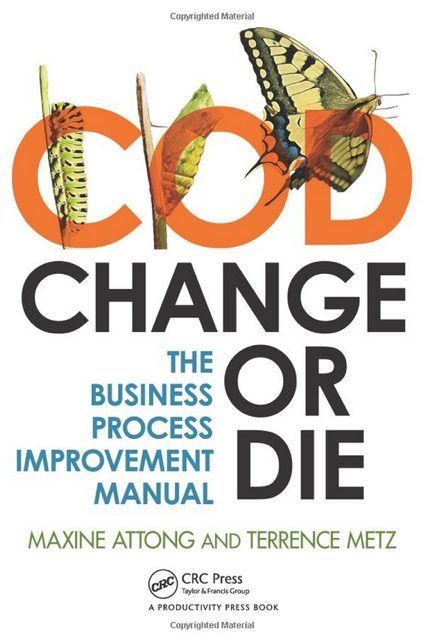
Metz’s first book, Change or Die: A Business Process Improvement Manual, tackled the challenges of process optimization. His upcoming book, Catalyst: Facilitating Innovation, focuses on meetings and workshops that don’t simply end when time runs out but conclude with actionable next steps and clear assignments—ensuring progress beyond discussions and ideas.
by Facilitation Expert | May 2, 2013 | Meeting Tools, Problem Solving
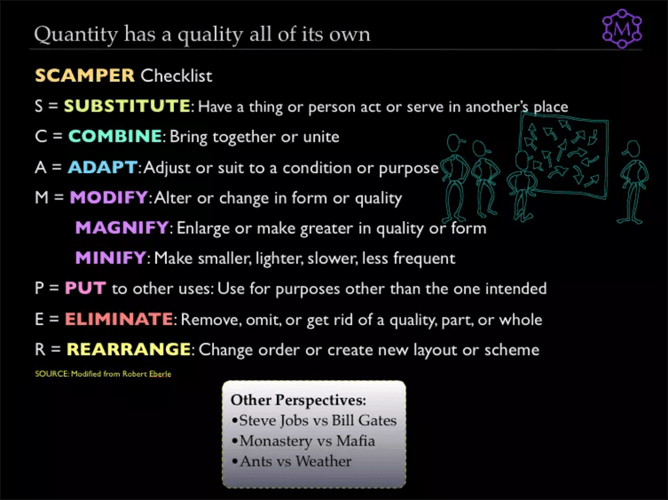
SCAMPER provides a ‘hip-pocket’ tool; i.e., an unplanned method of developing appropriate questions on an impromptu basis.
With SCAMPER, you may also take raw input (i.e., first-cut ideation lists) and challenge participants to calibrate their raw input into something closer to the form of the answer being sought. Use the questions prompted by SCAMPER to stimulate more ideas quickly. For example, “How might we combine ‘A’ and ‘B’?”
“The intellect has little to do on the road to discovery. There comes a leap in consciousness, call it intuition or what you will, and the solution comes to you and you don’t know how or why.”
— Albert Einstein
SCAMPER Method
SCAMPER is a Mnemonic Prompt
Select appropriate questions offered through the mnemonic known as SCAMPER and challenge some of the raw data or initial input to help the group build and understand additional options.
SCAMPER — Similar Perspectives
In addition to SCAMPER, consider changing perspective to capture new ideas. For example, assign analogies of famous people, organizations, or entropic situations. Ask—“What would (insert blank from below) do in this scenario?” Or, compare and contrast results through break-out groups, such as:
- Steve Jobs and Apple versus Bill Gates and Microsoft
- A monastery versus the mafia (organized crime)
- A university versus the military
- An ant kingdom versus the weather system (ecosystem), etc.
Nobody is smarter than everybody because groups create more options than individual ideas that are aggregated. SCAMPER or changing perspectives makes it easier to create new ideas during the meeting that did not exist prior to the meeting. Any group or individual is known to make higher quality decision when provided with more options.
______
Don’t ruin your career by hosting bad meetings. Sign up for a workshop or send this to someone who should. MGRUSH workshops focus on meeting design and practice. Each person practices tools, methods, and activities every day during the week. Therefore, while some call this immersion, we call it the road to building high-value facilitation skills.
Terrence Metz, president of MG RUSH Facilitation Training, was just 22-years-old and working as a Sales Engineer at Honeywell when he recognized a widespread problem—most meetings were ineffective and poorly led, wasting both time and company resources. However, he also observed meetings that worked. What set them apart? A well-prepared leader who structured the session to ensure participants contributed meaningfully and achieved clear outcomes.
Throughout his career, Metz, who earned an MBA from Kellogg (Northwestern University) experienced and also trained in various facilitation techniques. In 2004, he purchased MG RUSH where he shifted his focus toward improving established meeting designs and building a curriculum that would teach others how to lead, facilitate, and structure meetings that drive results. His expertise in training world-class facilitators led to the 2020 publication of Meetings That Get Results: A Guide to Building Better Meetings, a comprehensive resource on effectively building consensus.
Grounded in the principle that “nobody is smarter than everybody,” the book details the why, what, and how of building consensus when making decisions, planning, and solving problems. Along with a Participant’s Guide and supplemental workshops, it supports learning from foundational awareness to professional certification.
Metz’s first book, Change or Die: A Business Process Improvement Manual, tackled the challenges of process optimization. His upcoming book, Catalyst: Facilitating Innovation, focuses on meetings and workshops that don’t simply end when time runs out but conclude with actionable next steps and clear assignments—ensuring progress beyond discussions and ideas.

by Facilitation Expert | Mar 21, 2013 | Planning Approach
It’s hard enough to get a family of four to agree on where to go out to eat much less getting a group of executives/ managers to agree on where they want to take their organization. To facilitate a vision for an organization—where it wants to go, appeal to both the head and the heart, supporting the question, “Why change?”
A clear vision statement of the future state helps to gain genuine commitment. Therefore, define vision first.
Defined: A vision is a desired position specified in sufficient detail so that an organization recognizes it when they reach it. A consensual vision provides direction and motivation for change.
Relationships
Facilitate vision to drive the objectives and define where the organization is going. A defined vision enables you to define key measures and more detailed objectives. Lay them out en route to ensure obtaining the vision.
Deliverable
When you facilitate vision, you create a clearly defined statement between 25 and 75 words in length.
Options
Use one of three methods:
- Define the vision statement by having your group use the Creativity Exercise (in MGRUSH Tools) to draw and illustrate where they are going. Have each breakout team describe their picture to the others and then capture an integrated vision statement, converting the pictures into narrative.
- Or, prepare a draft vision statement (frequently gathered from the senior manager of the group) and write it on a flip chart. Define a vision statement then review this with the group and have them modify it to meet their needs.
- Or, using the Temporal Shift tool below, have the group develop a newspaper or magazine headline that they would like to see in a major newspaper on the date of the vision—e.g., “What would the newspaper headline read on January 15, 20xx?” Next, have them embellish the headline with the story behind the headline. Hence, this headline and story support the vision.
TEMPORAL SHIFT TOOL
Purpose
Helps facilitate vision by getting groups to agree on where to go or be at some point in the future.
Rationale
Have you ever had a problem getting a group of friends or family to agree on where to go to eat? Now try to get a group of bright professionals to agree on where they are headed! It is much easier to ask and build consensus around “Where have you been?” or, “What type of legacy have you left behind?”
This step defines the specific vision of the organization—where it wants to go. Projects, initiatives, activities, and organizational effort are directed toward attaining the vision. Vision drives objectives and other key measures, not the other way around.
Method
Hand out recent copies of an appropriate industry organizational or trade magazine or periodical familiar to the participants. Turn them to a specific page (could be the front cover) or column that is frequently read. The Wall Street Journal could be a default publication that you use, but decide which section will display the headline based on the type of group you are working with.
Have each group develop a newspaper headline that they would like to read on the date of their vision—e.g., “What would the headline read on January 15, 20xx?” Have them embellish the headline with the 250-word story behind the headline.
Bring the groups together to compare and contrast. Work the Bookends looking for similarities and differences. First, convert the headline. The story items supporting the headlines can then be used to add detail to the vision.
NOTE: Pretend they are on a beach in the future and pick up this periodical, what you are really asking them is “What is the legacy you have left behind as a result of the effort at hand?” Establish the time in the future based on when this group has disbanded.
Suggestion
See the following website for headlines from around the world:
http://www.newseum.org/todaysfrontpages/ or
http://www.pressreader.com.
Timing
Facilitating vision typically takes from 30 minutes to two hours.
Closure
This step is complete when you have a statement (not necessarily grammatically pure) that the group believes captures the target or vision of where they want to go. Check with them to see if they can recognize the target defined by their vision and would agree if they get there.
Reply with any questions you might have by commenting below. For additional methodology and team-based meeting support for your change initiatives, refer to our store http://mgrush.com/shop/ or consider the book “Change or Die, a Business Process Improvement Manual” for much of the support you might need to lead more effective groups, teams, and meetings. Don’t forget to illustrate using your metaphor, as a metaphor is worth a thousand pictures.
______
In a world where everyone can engage in decisions that affect them
______
Lead the Change—One Meeting at a Time
Are you ready to transform how decisions are made, problems are solved, and alignment is built in your organization?
True meeting leadership goes beyond setting an agenda. It requires a facilitator who can navigate complexity, balance voices, and drive toward outcomes with clarity and consensus. Our Professional Meeting Leadership Workshop and facilitation training equips you to do just that—blending human-centric methods with structured analytical tools to foster rigor, inclusivity, and results that stick.
- Practice live.
- Get expert feedback.
- Build confidence that lasts.
Whether your meetings suffer from unclear objectives, disengaged participants, or decision fatigue, this workshop will help you identify the root causes, apply proven facilitation techniques, and emerge as the leader every team needs.
Take the first step today—transform your meetings and magnify your impact.
👉 Click here to reserve your seat now.
#facilitationtraining #meetingdesign
Because every meeting should be a catalyst for change—not just another calendar event.
______
With Bookmarks no longer a feature in WordPress, we provide the following for your benefit and reference.
______
Terrence Metz, president of MG RUSH Facilitation Training, was just 22-years-old and working as a Sales Engineer at Honeywell when he recognized a widespread problem—most meetings were ineffective and poorly led, wasting both time and company resources. However, he also observed meetings that worked. What set them apart? A well-prepared leader who structured the session to ensure participants contributed meaningfully and achieved clear outcomes.
Throughout his career, Metz, who earned an MBA from Kellogg (Northwestern University) experienced and also trained in various facilitation techniques. In 2004, he purchased MG RUSH where he shifted his focus toward improving established meeting designs and building a curriculum that would teach others how to lead, facilitate, and structure meetings that drive results. His expertise in training world-class facilitators led to the 2020 publication of Meetings That Get Results: A Guide to Building Better Meetings, a comprehensive resource on effectively building consensus.
Grounded in the principle that “nobody is smarter than everybody,” the book details the why, what, and how of building consensus when making decisions, planning, and solving problems. Along with a Participant’s Guide and supplemental workshops, it supports learning from foundational awareness to professional certification.
Metz’s first book, Change or Die: A Business Process Improvement Manual, tackled the challenges of process optimization. His upcoming book, Catalyst: Facilitating Innovation, focuses on meetings and workshops that don’t simply end when time runs out but conclude with actionable next steps and clear assignments—ensuring progress beyond discussions and ideas.

by Facilitation Expert | Mar 7, 2013 | Meeting Agendas
Chairing meetings requires many of the skills to facilitate effectively
Success begins with vision and meeting vision comes alive by articulating the purpose, scope, and objectives in advance. Other considerations that support successful facilitating or chairing rely heavily on people skills such as:
Leadership when Chairing Meetings
- Ability to trust in the good nature of the human spirit, even in high-risk situations
- Accepting participants for what they are and not what you wish they were
- Capacity to approach people for their present value rather than past performance
- Embracing human nature that does not require approval or recognition
- Willingness to treat everyone, even casual acquaintances, with common courtesies and kindness
Flexibility when Chairing Meetings
Effective leaders when chairing meetings also remain flexible. Ironically, the best-prepared and fully structured plans afford the most freedom and flexibility because they provide a backup plan if ad hoc or spontaneous discussions prove fruitless. As emphasized in other posts, communicating clearly is important to any leader, facilitator, or chair. Beware of participant biases and tendencies including:
- Missing the context through which a claim may be valid
- Overgeneralization that causes lost or misinterpreted meaning
- Presumptions that everyone is thinking what the subject matter expert is thinking
- Primacy and recency effects—whereby the first and final arguments carry more weight
- Use of terms that are unclear or ambiguous
16 Tips When Chairing Meetings
Additionally, and specifically when chairing meetings, as opposed to workshop facilitators, here are seventeen additional and valuable tips:
- Always know your deliverable is the same as the meeting objective and logically identical to starting with the end in mind. In the world of Lean Sigma, this is called “right to left” thinking.
- Always strive to separate facts and evidence from beliefs and opinions.
- Arrive first and prepare your physical space for optimal seating arrangements.
- Clarify frequently so that everyone is offered an opportunity to question and challenge. They will find it easier to challenge you as chair, than the original speaker who may own the content.
- Consider posting the deliverable visually on a large sheet of paper, and restate periodically to reinforce the purpose of the meeting.
- Explain your role and aspiration to embrace the people and communication skills mentioned above.
- Help manage conflict and do not simply ignore it. Some of the best ideas and strongest solutions result from getting conflict out in the open where everyone can understand.
- Limit the size of the meeting by keeping representation between five and nine participants, known to be the “sweet spot” for optimal decision-making. The Agile mindset calls this seven, plus or minus two.
Additionally . . .
Manage housekeeping (administrivia) such as bathroom locations and safety procedures during your introduction.
- Manage transitions carefully by reviewing a closed agenda step and clearly moving on to the next open agenda step.
- Prepare, presell, and at the start of the meeting review the meeting purpose, scope, objectives, agenda, and estimated duration. Because participants should own the meeting output, they have a right to influence how the output is built.
- Protect your participants but realize that it is not your job to reach down their throat and pull it out of them. As employees or associates, they have a fiduciary responsibility to speak up when they can offer value.
- Remain impartial during arguments, or at least demonstrate the appearance of impartiality so that participants can arrive at their own conclusions.
- Restrict discussion to agenda items or you will subject yourself to scope creep within the meeting, and risk not getting done on time.
- Seek contributions from everyone but do not embarrass anyone by forcing them to speak.
- Start on time and police and breaks carefully as well. Do not penalize participants who are on time by starting late.
- Take breaks when necessary, likely more than traditional. A five-minute break every 40 minutes may be better than a fifteen-minute break every two hours.
______
Don’t ruin your career by hosting bad meetings. Sign up for a workshop or send this to someone who should. MGRUSH workshops focus on meeting design and practice. Each person practices tools, methods, and activities every day during the week. Therefore, while some call this immersion, we call it the road to building high-value facilitation skills.
Terrence Metz, president of MG RUSH Facilitation Training, was just 22-years-old and working as a Sales Engineer at Honeywell when he recognized a widespread problem—most meetings were ineffective and poorly led, wasting both time and company resources. However, he also observed meetings that worked. What set them apart? A well-prepared leader who structured the session to ensure participants contributed meaningfully and achieved clear outcomes.
Throughout his career, Metz, who earned an MBA from Kellogg (Northwestern University) experienced and also trained in various facilitation techniques. In 2004, he purchased MG RUSH where he shifted his focus toward improving established meeting designs and building a curriculum that would teach others how to lead, facilitate, and structure meetings that drive results. His expertise in training world-class facilitators led to the 2020 publication of Meetings That Get Results: A Guide to Building Better Meetings, a comprehensive resource on effectively building consensus.
Grounded in the principle that “nobody is smarter than everybody,” the book details the why, what, and how of building consensus when making decisions, planning, and solving problems. Along with a Participant’s Guide and supplemental workshops, it supports learning from foundational awareness to professional certification.
Metz’s first book, Change or Die: A Business Process Improvement Manual, tackled the challenges of process optimization. His upcoming book, Catalyst: Facilitating Innovation, focuses on meetings and workshops that don’t simply end when time runs out but conclude with actionable next steps and clear assignments—ensuring progress beyond discussions and ideas.
by Facilitation Expert | Feb 14, 2013 | Meeting Agendas, Meeting Structure, Meeting Support, Meeting Tools
Effective meetings are first based on a clear line of sight to an end result, preferably something that can be documented.
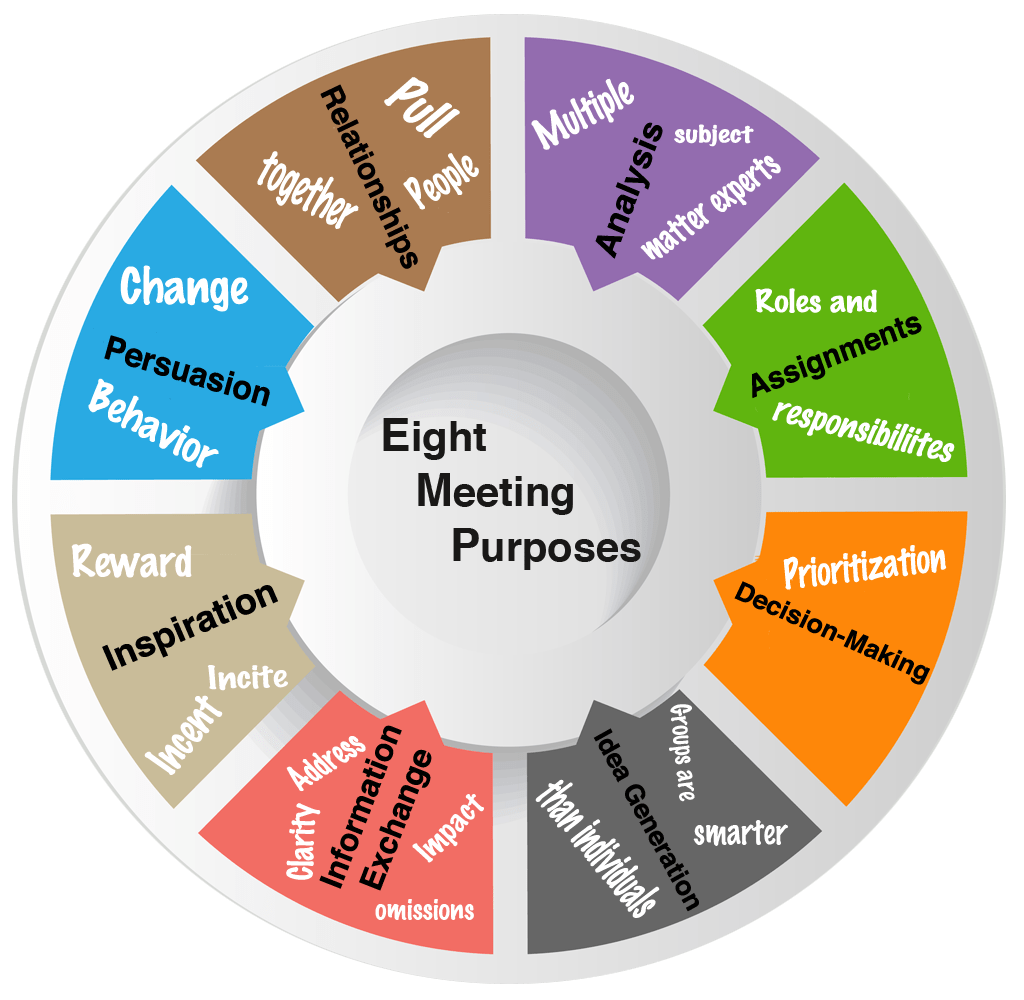
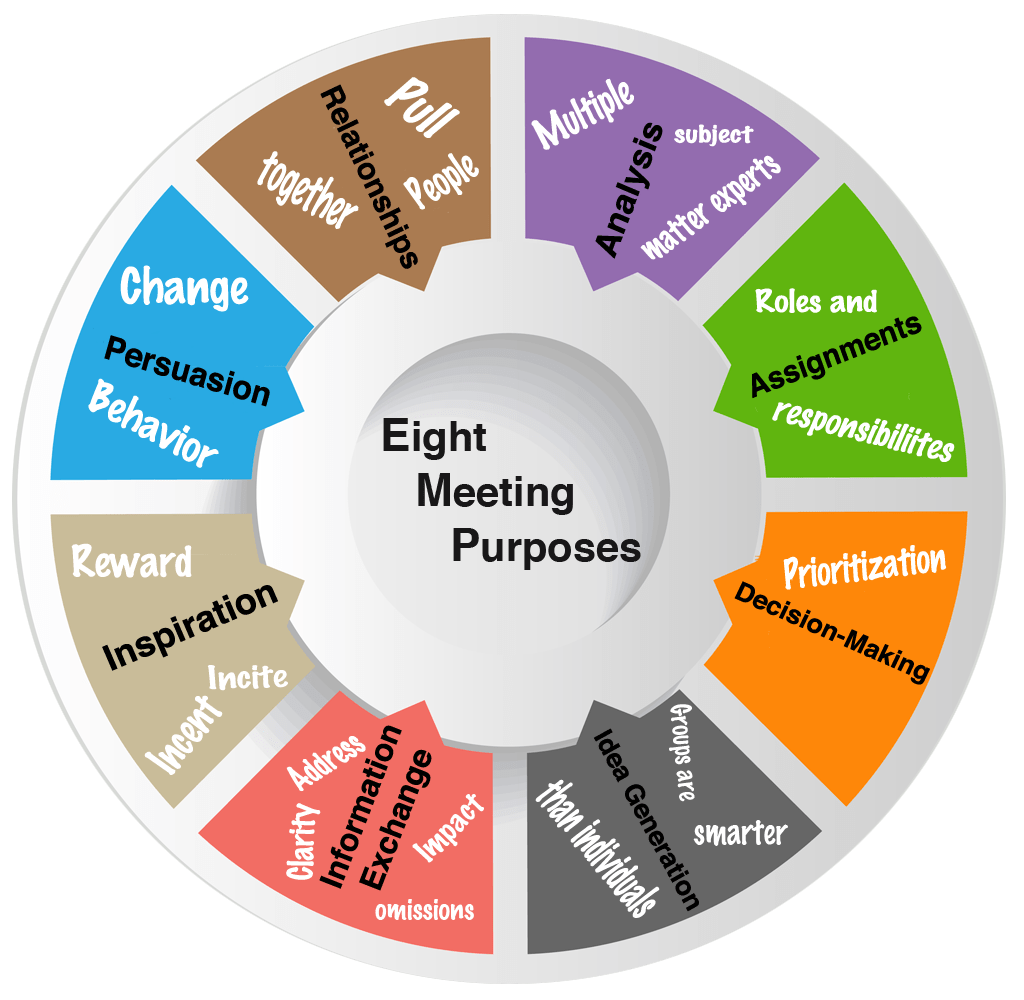
Yet, frequently meeting purposes rely on determining WHAT deliverable or result to create. Consequently, using meeting time to determine the meeting output indicates unclear thinking and weak meeting design. Avoid wasting time by knowing your purpose in advance. The eight most common meeting purposes and benefits and problems include the following.
Eight Meeting Purposes
Analysis
- Highly complex situations may require multiple subject matter experts. Frequently, experts have their own vocabulary and a meeting helps to clarify understanding and agreement about terms and definitions. Have you ever run a meeting with Ph.D. engineers and creative marketing folks together? As a result, sometimes it sounds like they are from different planets. Carefully document operational definitions that arise during analysis sessions. You may discover people violently agreeing with each other. Unfortunately, they use different words to describe the same thing or define the same thing differently.
Assignments
- Structured meetings or workshops provide an excellent means of building agreement around roles and responsibilities. Furthermore, when using a structured method, you can leave the meeting with a consensually built GANTT chart, estimation of resource requirements, and approximation of budget needs. Because “WHO Does WHAT by WHEN” captures the primary reason behind a planning session, focus on the actions first before you make the assignments.
Decision-Making
- Since resources typically fall short of the demands, prioritization remains critical for high-performance groups. As a result, no teams possess the time or resources to do everything. Consensual understanding around prioritization provides a compelling reason for hosting a meeting or workshop. Since items that need to be prioritized range from the simple to the complicated through the complex, identify the most appropriate tool for prioritizing, before the meeting starts. Then, prepare a backup approach as well.
Idea Generation
- Because groups create more options than simply aggregating the input of participants, groups are smarter than the smartest person in the group. Many of the best ideas did not walk into the meeting because they were created during the meeting, based on stimulation provided by the input from others. Use SCAMPER or Changing Perspectives to drive more ideas, thus increasing your likelihood for applied creativity, innovation, or breakthrough.
Information Exchange
- By far and away the most common reason for meetings may also be the worst possible reason for justifying a meeting. With instant access and electronic filing cabinets, coming together face-to-face is a very expensive way to exchange information (albeit potentially quicker and less costly when conducted online). A better justification would be to address questions about clarity, agreement, and omissions of information that has already been exchanged. Alternatively, use meeting time to explore the impact the information might have on the plans and behavior of meeting participants and related stakeholders.
Inspiration and Fun
- Use meetings to reward, incentivize, and incite because they can be effective at motivating others. They are usually hosted on a large scale and include complimentary events or sessions that may advance learning and improve teamwork. Therefore, anticipate using breakout sessions by creatively preparing activities appropriate for your participants and the situational constraints. The quality of group output increases tremendously when you contrast and compare input from different teams. Plus, with breakout sessions, you are giving quieter people permission to speak freely. Participants afraid of speaking up in a group are less reticent to make contributions to the conversations that occur with a few people in a breakout session.
Persuasion
- Persuading and convincing others to agree with your argument or decision represents the worst possible reason for holding a meeting. Consider the three primary forms of persuasion, namely: identification (e.g., advertising), internalization (i.e., long-lasting), and forced compliance (i.e., “gun to the head”). Because meetings display ineffectiveness using any of the three primary forms of persuasion, they rarely succeed at convincing others. In fact, they can backfire. When the leader appears to have already made up their mind, participants wonder why they had to waste their time in a meeting. If you have the answer, tell them, and do not conduct a meeting. Meetings represent a highly expensive forum for information-sharing.
Relationships
- Simply bringing together people face-to-face provides the glue that pulls people together and gets them to work more cooperatively. Frequently venting, or managing conflict, results in increased effectiveness. When people don’t agree with each other and need to reconcile their points of view invest in face-to-face meetings. Arguments are rarely settled by text messages and PDF documents. Many times, conflict and arguments also require a referee, the perfect time to engage a facilitator.
Five compelling reasons to host facilitated sessions
Why host facilitated sessions? Making choices represents the most important actions people take every day, to decide. Properly made decisions amplify productivity. Choose wisely when to work alone, speak with another person, or call for a team meeting. The advantages of a structured meeting or workshop include:
Host Facilitated Sessions
- Higher quality results: Groups of people make higher quality decisions than the smartest person in the group. Facilitated sessions encourage the exchange of different points of view. Structure enables groups to identify new options. In fact, any person or group with more options at its disposal makes higher-quality decisions.
- Faster results: Facilitated sessions accelerate the capture of information. Faster output results when meeting participants (aka subject matter experts) arrive prepared. Participants arrive with an understanding of the questions and issues at hand.
- Richer results: By pooling skills and resources, diverse and heterogeneous groups develop more specific details and anticipate future demands, subsequently saving time and money in the project or program life-cycle.
- People stimulate people: Properly facilitated sessions lead to innovation and the catalyst for innovative opportunities because many perspectives generate a richer (360-degree) understanding of a problem or challenge, rather than a narrow, myopic view.
- Transfer of ownership: Facilitated sessions motivate further action by creating deliverables that support follow-up efforts. Professional facilitators use a method that builds commitment and support from the participants, rather than directing responsibility at the participants.
To Host Facilitated Sessions
Conducting facilitated sessions includes preparatory time, actual contact time during the session, and follow-up time as well. Therefore, successful sessions depend upon clearly defined roles, especially distinguishing between the role of facilitator and the role of methodologist (that are also discrete from the role of scribe or documenter, coordinator, etc.). To ensure getting done faster, carefully managed sessions embrace ground rules.
Thorough preparation and advance effort before the session ensures higher productivity:
- Researching both meeting design options and content to be explored
- Review and documentation of minutes, records, findings, and group decisions that affect the project being supported with this particular meeting or workshop session
- Completion of individual and small group assignments prior to sessions
Incite Involvement, Incent Ownership
Professional and structured facilitation generates high involvement among all participants. Therefore, appropriate terms for describing them include workshops or workouts. Consequently, avoid an overly ambitious agenda and plan for at least two, ten-minute breaks every four hours. Use our MGRUSH ten-minute timers to ensure that breaks do not extend to eleven or twelve minutes. Strive to provide dedicated resources, such as a facilitator professionally trained in structured methods.
Discourage unplanned interruptions, especially with phones and laptops. “Topless” meetings are increasingly popular, meaning no laptops or devices (e.g., smartphones). Allow exceptions for accessing content needed during the session. “No praying underneath the table” is another rule used to discourage people from using gadgets on their laps, presumably beyond the line of sight of others. In fact, everyone can see what they are doing anyway. For serious consensual challenges or multiple-day sessions, conduct sessions away from the participants’ everyday work site to minimize interruptions and everyday job distractions.
Chief Collaboration Officers
Granted, much of the material above becomes the responsibility of the facilitator. But if they won’t do it, you better. Remember, collaborative work replaces thousands of dollars lost in poorly run meetings. Harvard Business Review (HBR) states further that collaboration answers many of the business challenges. HBR encourages leaders to promote collaborative work and teamwork, and suggest . . .
“. . . we believe that the time may have come for organizations to hire chief collaboration officers.”
In a world where everyone can engage in decisions that affect them
______
Lead the Change—One Meeting at a Time
Are you ready to transform how decisions are made, problems are solved, and alignment is built in your organization?
True meeting leadership goes beyond setting an agenda. It requires a facilitator who can navigate complexity, balance voices, and drive toward outcomes with clarity and consensus. Our Professional Meeting Leadership Workshop and facilitation training equips you to do just that—blending human-centric methods with structured analytical tools to foster rigor, inclusivity, and results that stick.
- Practice live.
- Get expert feedback.
- Build confidence that lasts.
Whether your meetings suffer from unclear objectives, disengaged participants, or decision fatigue, this workshop will help you identify the root causes, apply proven facilitation techniques, and emerge as the leader every team needs.
Take the first step today—transform your meetings and magnify your impact.
👉 Click here to reserve your seat now.
#facilitationtraining #meetingdesign
Because every meeting should be a catalyst for change—not just another calendar event.
______
With Bookmarks no longer a feature in WordPress, we provide the following for your benefit and reference.
______
Terrence Metz, president of MG RUSH Facilitation Training, was just 22-years-old and working as a Sales Engineer at Honeywell when he recognized a widespread problem—most meetings were ineffective and poorly led, wasting both time and company resources. However, he also observed meetings that worked. What set them apart? A well-prepared leader who structured the session to ensure participants contributed meaningfully and achieved clear outcomes.
Throughout his career, Metz, who earned an MBA from Kellogg (Northwestern University) experienced and also trained in various facilitation techniques. In 2004, he purchased MG RUSH where he shifted his focus toward improving established meeting designs and building a curriculum that would teach others how to lead, facilitate, and structure meetings that drive results. His expertise in training world-class facilitators led to the 2020 publication of Meetings That Get Results: A Guide to Building Better Meetings, a comprehensive resource on effectively building consensus.
Grounded in the principle that “nobody is smarter than everybody,” the book details the why, what, and how of building consensus when making decisions, planning, and solving problems. Along with a Participant’s Guide and supplemental workshops, it supports learning from foundational awareness to professional certification.
Metz’s first book, Change or Die: A Business Process Improvement Manual, tackled the challenges of process optimization. His upcoming book, Catalyst: Facilitating Innovation, focuses on meetings and workshops that don’t simply end when time runs out but conclude with actionable next steps and clear assignments—ensuring progress beyond discussions and ideas.