Meeting Transition questions is highly effective because you cannot develop a plan, any plan, such as a marketing plan, by asking “What is the marketing plan?” The question is so broad as to be dull, ubiquitous, myopic, and broad (DUMB).

Three Transition Questions for Clarity and Precision
It’s not easy for participants to respond to broad questions like “How do you solve global hunger?” While appropriate, the question’s scope is too broad (and perhaps vague) to stimulate specific, actionable responses like “We could convert those abandoned mine shafts in Somalia and create food storage areas.”
Three Appropriate Yet Powerful Transition Questions
Extemporaneous leaders should develop a tendency to modify three core transition questions during meetings instead of asking broad questions like, “Are we OK with this list?” or, “Can we move on?” Therefore, use more structure and precision by relying on transition questions with these three simple, pertinent, and clear questions that can be modified to your own situation:
- Do we need to clarify anything (e.g., on this list)? (First test for clarity and shared understanding only, not necessarily agreement).
- Do we need to delete anything (e.g., from this list)? (Next test for appropriateness, relevancy, and potential redundancy).
- Do we need to add anything (e.g., to this list)? (Finally, scrub for omissions or something significant that needs to be considered in addition to what has been already captured).
The three detailed transition questions make it easier for meeting participants to analyze, agree, and move on. Consequently, after participants have agreed they understand, have been provided an opportunity to remove something they cannot support, and have been challenged to add something they may have missed, you are prepared to properly transition.
The clarity and precision of the three transition questions demand more rigorous thinking and encourage the focus most people need to apply thorough analysis. Make it easier for your participants, and avoid the vague, extemporaneous questions that result in the worst deliverable you could ever develop in a meeting—another meeting.
______
Meetings must rise above the tiny opening of words and embrace the fullness of human insight—through listening, visuals, stories, numbers, and symbols. The transformation begins not with tools, but in mindset. Leave your ego at the threshold, and step into the structures of meetings that get results.
In a world where everyone can engage in decisions that affect them
______
Lead the Change—One Meeting at a Time
Are you ready to transform how decisions are made, problems are solved, and alignment is built in your organization?
True meeting leadership goes beyond setting an agenda. It requires a facilitator who can navigate complexity, balance voices, and drive toward outcomes with clarity and consensus. Our Professional Meeting Leadership Workshop and facilitation training equips you to do just that—blending human-centric methods with structured analytical tools to foster rigor, inclusivity, and results that stick.
- Practice live.
- Get expert feedback.
- Build confidence that lasts.
Whether your meetings suffer from unclear objectives, disengaged participants, or decision fatigue, this workshop will help you identify the root causes, apply proven facilitation techniques, and emerge as the leader every team needs.
Take the first step today—transform your meetings and magnify your impact.
______
👉 Click here to reserve your seat now.
#facilitationtraining #meetingdesign
Because every meeting should be a catalyst for change—not just another calendar event.
______
And earn up to 40 professional development credits with our facilitation training.
- CDUs (IIBA)
- CLPs (Federal Acquisition)
- PDUs (SAVE International)
- SEUs (Scrum Alliance)
- 4.0 CEUs (General Professions)
______
With Bookmarks no longer a feature in WordPress, we provide the following for your benefit and reference.
- 20 Prioritization Techniques = https://foldingburritos.com/product-prioritization-techniques/
- Creativity Techniques = https://www.mycoted.com/Category:Creativity_Techniques
- Facilitation Training Calendar = https://mgrush.com/public-facilitation-training-calendar/
- Liberating Structures = http://www.liberatingstructures.com/ls-menu
- Management Methods = https://www.valuebasedmanagement.net
- Newseum = https://www.freedomforum.org/todaysfrontpages/
- People Search = https://pudding.cool/2019/05/people-map/
- Project Gutenberg = http://www.gutenberg.org/wiki/Main_Page
- Scrum Events Agendas = https://mgrush.com/blog/scrum-facilitation/
- Speed test = https://www.speedtest.net/result/8715401342
- Teleconference call = https://youtu.be/DYu_bGbZiiQ
- The Size of Space = https://neal.fun/size-of-space/
- Thiagi/ 400 ready-to-use training games = http://thiagi.net/archive/www/games.html
- Visualization methods = http://www.visual-literacy.org/periodic_table/periodic_table.html#
______
Related article
- SCAMPER is a Mnemonic to Prompt for Excellent, Impromptu Questions (mgrush.com/blog)
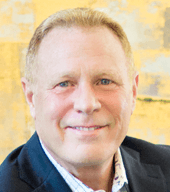
Terrence Metz, president of MG RUSH Facilitation Training, was just 22-years-old and working as a Sales Engineer at Honeywell when he recognized a widespread problem—most meetings were ineffective and poorly led, wasting both time and company resources. However, he also observed meetings that worked. What set them apart? A well-prepared leader who structured the session to ensure participants contributed meaningfully and achieved clear outcomes.
Throughout his career, Metz, who earned an MBA from Kellogg (Northwestern University) experienced and also trained in various facilitation techniques. In 2004, he purchased MG RUSH where he shifted his focus toward improving established meeting designs and building a curriculum that would teach others how to lead, facilitate, and structure meetings that drive results. His expertise in training world-class facilitators led to the 2020 publication of Meetings That Get Results: A Guide to Building Better Meetings, a comprehensive resource on effectively building consensus.
Grounded in the principle that “nobody is smarter than everybody,” the book details the why, what, and how of building consensus when making decisions, planning, and solving problems. Along with a Participant’s Guide and supplemental workshops, it supports learning from foundational awareness to professional certification.
Metz’s first book, Change or Die: A Business Process Improvement Manual, tackled the challenges of process optimization. His upcoming book, Catalyst: Facilitating Innovation, focuses on meetings and workshops that don’t simply end when time runs out but conclude with actionable next steps and clear assignments—ensuring progress beyond discussions and ideas.
