
The main reason for categorizing input relies on a common purpose. Most groups gather around a common purpose.
For example, treasury groups gather their departments around financial capital. While human resources gather their departments around human capital. Sales and marketing gather around customers’ needs for products and services. Force your participants to make thinking visible around their purpose and why they organize the way they do.
Evidence-based
Three forms of support for business argumentation include:
How to Make Thinking Visible
- Evidence,
- Values, and
- Credibility
When you challenge meeting participants to make their ‘thinking visible’, use active listening and reflect back on WHY they believe their claims to be true. Isolate the proof behind their claims, understanding that you will need to reflect on the facts and examples they provide to boost their claim. Let us take a closer look at the three forms.
Evidence
Much is written about evidence, and while the following is not all of it, business arguments rely on three types of evidence to support claims, namely:
- Surrogates
- Trends
- Vision
Surrogates
Surrogates provide examples and operate through analogy to support arguments. Meeting members might refer to competitors as surrogates for their own group. Examples might not even come from within the industry but may derive from an analogous situation. Some clothing dry cleaners introduced drive-up services, having viewed the success of a surrogate industry, the fast food industry.
Trends
Statistics are frequently used to support business arguments. Since proof about future conditions cannot be established, support is provided for likelihood and probabilities. As you know, historical performance does not prove future performance. The value of statistics derives from trend lines.
Historical performance and statistics provide a lagging indication when time has passed and nothing can be done to reverse the past. Linked together, however, tends to appear to support the likelihood or probability of future performance. As a facilitator, be prepared to further challenge the assumptions from historical performance that may be carried over to support future claims.
Vision
When leadership establishes visionary claims, such as establishing “world-class” or “best-of-breed” aspirations, meeting participants will use the vision to support their claims. Visionary arguments may be similar to arguments supported by values, in that they are likely to be more fuzzy than SMART.
Organizational goals and objectives capture measurements toward the vision and will be used to support many arguments. If participants can make clear claims for example, that their positions will generate the most profit, most will support them if their claims are clear and valid.
Values
Operating in a similar fashion to vision, values also drive “board room to boiler room” behavior and will be used to support arguments. An organization focused on “safety” for example, may defer to the argument that claims to be the safest approach if everything else is held constant.
As a facilitator, strive to have the organizational values (also called Guiding Principles, Tenets, Elements, etc.) handy, and preferably posted for all to see. Likewise, having a clear line of sight to enterprise, business unit, departmental, and project objectives can be leveraged to resolve arguments.
Credibility
Credibility is “the perception that the arguer is competent and trustworthy, and has good will” (see “Argumentation and Critical Decision Making” by Rieke, Sillars, and Peterson, pg 280) toward the other meeting participants. Participants naturally give stronger adherence to other participants with greater credibility. Extensive research and other books and journals speak to the power of credibility. From a facilitator’s perspective, challenge even the credible to make their thinking visible. Make sure everyone in the meeting understands WHY the credible participant has formed his or her belief or claim.
______
Lead the Change—One Meeting at a Time
Are you ready to transform how decisions are made, problems are solved, and alignment is built in your organization?
True meeting leadership goes beyond setting an agenda. It requires a facilitator who can navigate complexity, balance voices, and drive toward outcomes with clarity and consensus. Our Professional Meeting Leadership Workshop equips you to do just that—blending human-centric methods with structured analytical tools to foster rigor, inclusivity, and results that stick.
- Practice live.
- Get expert feedback.
- Build confidence that lasts.
Whether your meetings suffer from unclear objectives, disengaged participants, or decision fatigue, this workshop will help you identify the root causes, apply proven facilitation techniques, and emerge as the leader every team needs.
Take the first step today—transform your meetings and magnify your impact.
👉 Click here to reserve your seat now.
(Limited availability)
Because every meeting should be a catalyst for change—not just another calendar event.
______
And earn up to 40 professional development credits.
- CDUs (IIBA)
- CLPs (Federal Acquisition)
- PDUs (SAVE International)
- SEUs (Scrum Alliance)
- 4.0 CEUs (General Professions)
______
With Bookmarks no longer a feature in WordPress, we provide the following for your benefit and reference.
- 20 Prioritization Techniques = https://foldingburritos.com/product-prioritization-techniques/
- Creativity Techniques = https://www.mycoted.com/Category:Creativity_Techniques
- Facilitation Training Calendar = https://mgrush.com/public-facilitation-training-calendar/
- Liberating Structures = http://www.liberatingstructures.com/ls-menu
- Management Methods = https://www.valuebasedmanagement.net
- Newseum = https://www.freedomforum.org/todaysfrontpages/
- People Search = https://pudding.cool/2019/05/people-map/
- Project Gutenberg = http://www.gutenberg.org/wiki/Main_Page
- Scrum Events Agendas = https://mgrush.com/blog/scrum-facilitation/
- Speed test = https://www.speedtest.net/result/8715401342
- Teleconference call = https://youtu.be/DYu_bGbZiiQ
- The Size of Space = https://neal.fun/size-of-space/
- Thiagi/ 400 ready-to-use training games = http://thiagi.net/archive/www/games.html
- Visualization methods = http://www.visual-literacy.org/periodic_table/periodic_table.html#
- Walking Gorilla = https://youtu.be/vJG698U2Mvo
______
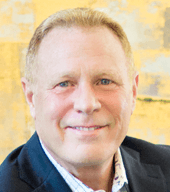
Terrence Metz, president of MG RUSH Facilitation Training, was just 22-years-old and working as a Sales Engineer at Honeywell when he recognized a widespread problem—most meetings were ineffective and poorly led, wasting both time and company resources. However, he also observed meetings that worked. What set them apart? A well-prepared leader who structured the session to ensure participants contributed meaningfully and achieved clear outcomes.
Throughout his career, Metz, who earned an MBA from Kellogg (Northwestern University) experienced and also trained in various facilitation techniques. In 2004, he purchased MG RUSH where he shifted his focus toward improving established meeting designs and building a curriculum that would teach others how to lead, facilitate, and structure meetings that drive results. His expertise in training world-class facilitators led to the 2020 publication of Meetings That Get Results: A Guide to Building Better Meetings, a comprehensive resource on effectively building consensus.
Grounded in the principle that “nobody is smarter than everybody,” the book details the why, what, and how of building consensus when making decisions, planning, and solving problems. Along with a Participant’s Guide and supplemental workshops, it supports learning from foundational awareness to professional certification.
Metz’s first book, Change or Die: A Business Process Improvement Manual, tackled the challenges of process optimization. His upcoming book, Catalyst: Facilitating Innovation, focuses on meetings and workshops that don’t simply end when time runs out but conclude with actionable next steps and clear assignments—ensuring progress beyond discussions and ideas.
