You may effectively facilitate Board Meetings by relying on Robert’s Rules of Order, however, blend in facilitative leadership skills to improve your decision quality.
In 1876 General Henry M. Robert wrote the rules of American Congress (Parliamentary Procedure) for all citizens and societal groups with his publication of Pocket Manual of Rules of Order. Nearly 150 years later, his grandson, Henry M. Robert III, was living with a FAST alumnus (a priest and rector) in the rectory at St Mary’s parish, Annapolis. They frequently argued at dinner time over the value of “voting” compared to “building consensus.” There is a time and place for both methods of decision-making. Never forget, however, that voting may not yield a better decision, only a bigger number.
With traditional Board Meetings, Parliamentary Procedure expedites the meeting and provides enough structure to ensure that the entire scope is covered properly. Specifically, embrace the following facilitative tips:
-
When You Facilitate Board Meetings, Include Ground Rules
Start every Board or Committee Meeting with a solid, well-prepared introduction. Get your meeting off to a solid start. Cover the seven required activities quickly, but thoroughly. In sequence, the Introductory activities ought to:

How to Facilitate Board Meetings
– Reinforce your role as facilitator and tiebreaker and their roles as equal voices
– Provide one statement that covers the purpose of the meeting
– Stipulate the scope of the meeting
– Codify one statement that distills the meeting deliverable
– Cover any administrative or non-content issues
– Quickly review the Agenda
– Provide Ground Rules to ensure the group gets more done, faster
2. When You Facilitate Board Meetings, Sustain an Upbeat Tempo
Your best meetings will conclude ahead of schedule. Do not over-invest in early topics and shortchange the value of later topics. New Business often follows Department Reports, and arguably remains the most important topic of the meeting. Get to it.
3. When You Facilitate Board Meetings, Do NOT Allow Scope Creep
Do not allow your participants to wander, ramble, and extemporaneously talk too much. Keep them on point. Focus on WHAT has transpired, NOT HOW they are accomplishing stuff. Most importantly, do not deviate from the agenda by jumping around to the topic of the moment. Cut people off if necessary with the caveat that their content will be covered in a later agenda step.
4. When You Facilitate Board Meetings, Focus on Output NOT Outcome
Satisfying the legality of required meetings should never be the deliverable. Focus on change and what actions transpire as a result of shared learnings, experience, and suggestions. Carefully record and separately document decisions, actions, and other inflection points. Visualize your deliverable for every step in the agenda. What should we do now? What should we do differently? If nothing changes, we probably waste our time.
5. When You Facilitate Board Meetings, Manage Open Issues and Next Steps
Make yourself comfortable with some method or tool for managing your Parking Lot and making follow-up assignments. If learnings need to be analyzed further, make your output clear so that your written statements remain as clear input when the issue is brought up again in a different forum. Conclude with any reminders that help participants show up better prepared for the next meeting. And remember, strive for consensus, rather than relying on voting as a simple way out. Likely a more sophisticated ‘way out’ will generate higher returns on the investment of your money and time.
In a world where everyone can engage in decisions that affect them
______
Lead the Change—One Meeting at a Time
Are you ready to transform how decisions are made, problems are solved, and alignment is built in your organization?
True meeting leadership goes beyond setting an agenda. It requires a facilitator who can navigate complexity, balance voices, and drive toward outcomes with clarity and consensus. Our Professional Meeting Leadership Workshop and facilitation training equips you to do just that—blending human-centric methods with structured analytical tools to foster rigor, inclusivity, and results that stick.
- Practice live.
- Get expert feedback.
- Build confidence that lasts.
Whether your meetings suffer from unclear objectives, disengaged participants, or decision fatigue, this workshop will help you identify the root causes, apply proven facilitation techniques, and emerge as the leader every team needs.
Take the first step today—transform your meetings and magnify your impact.
👉 Click here to reserve your seat now.
#facilitationtraining #meetingdesign
Because every meeting should be a catalyst for change—not just another calendar event.
______
With Bookmarks no longer a feature in WordPress, we provide the following for your benefit and reference.
- 20 Prioritization Techniques = https://foldingburritos.com/product-prioritization-techniques/
- Creativity Techniques = https://www.mycoted.com/Category:Creativity_Techniques
- Facilitation Training Calendar = https://mgrush.com/public-facilitation-training-calendar/
- Liberating Structures = http://www.liberatingstructures.com/ls-menu
- Management Methods = https://www.valuebasedmanagement.net
- Newseum = https://www.freedomforum.org/todaysfrontpages/
- People Search = https://pudding.cool/2019/05/people-map/
- Project Gutenberg = http://www.gutenberg.org/wiki/Main_Page
- Scrum Events Agendas = https://mgrush.com/blog/scrum-facilitation/
- Speed test = https://www.speedtest.net/result/8715401342
- Teleconference call = https://youtu.be/DYu_bGbZiiQ
- The Size of Space = https://neal.fun/size-of-space/
- Thiagi/ 400 ready-to-use training games = http://thiagi.net/archive/www/games.html
- Visualization methods = http://www.visual-literacy.org/periodic_table/periodic_table.html#
______
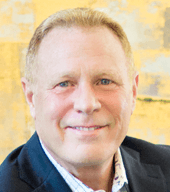
Terrence Metz, president of MG RUSH Facilitation Training, was just 22-years-old and working as a Sales Engineer at Honeywell when he recognized a widespread problem—most meetings were ineffective and poorly led, wasting both time and company resources. However, he also observed meetings that worked. What set them apart? A well-prepared leader who structured the session to ensure participants contributed meaningfully and achieved clear outcomes.
Throughout his career, Metz, who earned an MBA from Kellogg (Northwestern University) experienced and also trained in various facilitation techniques. In 2004, he purchased MG RUSH where he shifted his focus toward improving established meeting designs and building a curriculum that would teach others how to lead, facilitate, and structure meetings that drive results. His expertise in training world-class facilitators led to the 2020 publication of Meetings That Get Results: A Guide to Building Better Meetings, a comprehensive resource on effectively building consensus.
Grounded in the principle that “nobody is smarter than everybody,” the book details the why, what, and how of building consensus when making decisions, planning, and solving problems. Along with a Participant’s Guide and supplemental workshops, it supports learning from foundational awareness to professional certification.
Metz’s first book, Change or Die: A Business Process Improvement Manual, tackled the challenges of process optimization. His upcoming book, Catalyst: Facilitating Innovation, focuses on meetings and workshops that don’t simply end when time runs out but conclude with actionable next steps and clear assignments—ensuring progress beyond discussions and ideas.
