To effectively control your meetings and finish faster meetings (ahead of schedule) requires an effort that begins long before your meeting starts.
We call the preparation period 7:59 work, as in before 8:00 AM. After the meeting starts, you can further accelerate group performance by serving your group as an effective process police person. The role of the facilitator mandates core skills such as clear rhetoric, detailed questions, constant observance, and rigid neutrality. The facilitator’s role also demands control of the meeting agenda so that you lead faster meetings.
A Deliverable for Every Step
Lead Faster Meetings by Explaining the WHY and HOW Behind the WHAT
The agenda is the roadmap by which the team advances from the start of the meeting (ie., metaphorically “8:00 AM”) to the end (ie., metaphorically “5:00 PM”). Solid, simple agendas do not include verbs. Verbs are work and nobody wants more work (e.g., “identify”, “define”, etc.) any more than nobody wants more meetings. Yet we meet frequently because we need deliverables. Each agenda step has its own deliverable that adds up to help you finish meetings faster.
Describe the deliverable for each step as the object (i.e., a noun) or objective of the step. For example, use “Key Measurements” instead of “Identifying Key Measurements.” The verb “Identifying” describes HOW we get the objectives of the step, and HOW we do it has more than one right answer.
As the facilitator, explain HOW, and more importantly WHY, each step in the agenda contributes. Notice that the object of the step is WHAT DONE LOOKS LIKE. Meeting participants can read the agenda (best to keep it posted) and seldom need to be reminded WHAT we need, but do need to be reinforced WHY it is important and HOW we are going to get there. WHY objects are posted on the agenda captures the white space, or space between the lines, and demands further explanation.
Explain the White Space
We have all been in a meeting when someone, usually an outlier, asks “Now WHY are we doing this?” Ever feel the oxygen get sucked out of the room? An effective facilitator anticipates that question and slows down during agenda transitions, a maneuver that is counter-intuitive to most who state “Let me review this quickly.”
The Tuckman Model suggests that groups, even high-performance teams, are subject to regression when transitioning from one step in your agenda to another. Be forewarned, transitions are the best time to slow down and carefully explain the white space:
- WHY did we build the output from the prior agenda step?
- HOW does it help us get out of this meeting faster; i.e., how does it relate to the meeting deliverable?
- WHAT are we going to do next?
- WHY are we doing it and HOW does it help us get out of this meeting faster; i.e., how does it support the meeting deliverable?
- WHY are the agenda items in the sequence provided?
Carefully explain the white space by answering the questions above and you will discover that your meetings finish meetings faster than ever.
______
Lead the Change—One Meeting at a Time
Are you ready to transform how decisions are made, problems are solved, and alignment is built in your organization?
True meeting leadership goes beyond setting an agenda. It requires a facilitator who can navigate complexity, balance voices, and drive toward outcomes with clarity and consensus. Our Professional Meeting Leadership Workshop equips you to do just that—blending human-centric methods with structured analytical tools to foster rigor, inclusivity, and results that stick.
- Practice live.
- Get expert feedback.
- Build confidence that lasts.
Whether your meetings suffer from unclear objectives, disengaged participants, or decision fatigue, this workshop will help you identify the root causes, apply proven facilitation techniques, and emerge as the leader every team needs.
Take the first step today—transform your meetings and magnify your impact.
👉 Click here to reserve your seat now.
(Limited availability)
Because every meeting should be a catalyst for change—not just another calendar event.
______
With Bookmarks no longer a feature in WordPress, we provide the following for your benefit and reference.
- 20 Prioritization Techniques = https://foldingburritos.com/product-prioritization-techniques/
- Creativity Techniques = https://www.mycoted.com/Category:Creativity_Techniques
- Facilitation Training Calendar = https://mgrush.com/public-facilitation-training-calendar/
- Liberating Structures = http://www.liberatingstructures.com/ls-menu
- Management Methods = https://www.valuebasedmanagement.net
- Newseum = https://www.freedomforum.org/todaysfrontpages/
- People Search = https://pudding.cool/2019/05/people-map/
- Project Gutenberg = http://www.gutenberg.org/wiki/Main_Page
- Scrum Events Agendas = https://mgrush.com/blog/scrum-facilitation/
- Speed test = https://www.speedtest.net/result/8715401342
- Teleconference call = https://youtu.be/DYu_bGbZiiQ
- The Size of Space = https://neal.fun/size-of-space/
- Thiagi/ 400 ready-to-use training games = http://thiagi.net/archive/www/games.html
- Visualization methods = http://www.visual-literacy.org/periodic_table/periodic_table.html#
- Walking Gorilla = https://youtu.be/vJG698U2Mvo
______
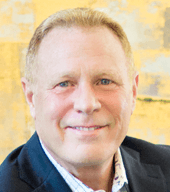
Terrence Metz, president of MG RUSH Facilitation Training, was just 22-years-old and working as a Sales Engineer at Honeywell when he recognized a widespread problem—most meetings were ineffective and poorly led, wasting both time and company resources. However, he also observed meetings that worked. What set them apart? A well-prepared leader who structured the session to ensure participants contributed meaningfully and achieved clear outcomes.
Throughout his career, Metz, who earned an MBA from Kellogg (Northwestern University) experienced and also trained in various facilitation techniques. In 2004, he purchased MG RUSH where he shifted his focus toward improving established meeting designs and building a curriculum that would teach others how to lead, facilitate, and structure meetings that drive results. His expertise in training world-class facilitators led to the 2020 publication of Meetings That Get Results: A Guide to Building Better Meetings, a comprehensive resource on effectively building consensus.
Grounded in the principle that “nobody is smarter than everybody,” the book details the why, what, and how of building consensus when making decisions, planning, and solving problems. Along with a Participant’s Guide and supplemental workshops, it supports learning from foundational awareness to professional certification.
Metz’s first book, Change or Die: A Business Process Improvement Manual, tackled the challenges of process optimization. His upcoming book, Catalyst: Facilitating Innovation, focuses on meetings and workshops that don’t simply end when time runs out but conclude with actionable next steps and clear assignments—ensuring progress beyond discussions and ideas.
