
In professional environments where teamwork, complexity, and consensus drive outcomes, the toll of poorly led meetings is not simply inefficiency; it is wasted opportunity.
To transform bad meetings into effective platforms for solving complex issues and driving project success, we must bridge the gap between passive participation and purposeful facilitation. This transformation demands an intentional shift in leadership mindset, facilitative technique, and group dynamics. Grounded in the teachings of Meetings That Get Results and structured meeting design principles, this article presents an insightful guide for that transformation and your personal facilitation training.
1. Start With Ego: Stop proving your value—and instead unlock the value of others.
The 10th verse of the Tao Te Ching challenges us:
Can you love your people and govern your domain without self-importance… working, yet not taking credit; leading without controlling or dominating?
The answer defines the modern facilitator. Bridging the gap begins not with control, but with humility and service. Meetings are not about the facilitator proving their value through airtime, but enabling others to demonstrate theirs. As noted in Meetings That Get Results,
“The more the facilitator talks, the worse the meeting is perceived.”
Facilitation is an act of listening—not performance. A facilitator must be a mirror, not a megaphone. This shift from authority to humility allows participants to claim ownership. It creates psychological safety and nurtures autonomous, self-organizing behavior.

Forge a Better Meeting
2. Use Pre-Work to Transfer Ownership.
Preparation changes everything. Send purpose, scope, objectives, and agenda well in advance. Confirm that participants:
- Agree with the meeting purpose
- Understand their role and contributions
- Can reference shared language (via a glossary)
Assemble visuals of enterprise mission or project objectives. Transfer accountability before the meeting even starts. Let participants show up as co-creators—not passive attendees.
3. Design for Participation, Not Presentation
People hate meetings not because of the time spent—but because of the time wasted.
“Effective facilitation flips the script: from passive audience to active co-creators. That means structuring meetings around engagement, not exposition.”
How?
- Breakout sessions foster safer small-group dialogue.
- Glossaries and visuals reduce semantic confusion and accelerate understanding.
- Non-verbal solicitation (eye contact, open posture) encourages participation.
Meeting design should include varied formats: think-pair-share, silent brainstorming, creativity, and clustering. This doesn’t just keep people busy—it brings out voices often silenced by traditional group dynamics.
4. Listen More Deeply Than You Speak
Dalai Lama once said:
“When you talk, you are only repeating what you already know; but when you listen, you may learn something new.”
Listening isn’t passive—it’s catalytic. Listening actively and empathetically allows a group to reveal the unspoken barriers, intentions, and wisdom beneath surface dialogue. This means facilitators must:
- Acknowledge silence and its value
- Refrain from judgment
- Tune into non-verbal signals
“Meetings transform when leaders stop trying to sound smart and instead make others feel heard.”
5. Facilitate Meaning and Intent—Not Just Words
The words we hear in meetings are only the tip of the iceberg. To truly facilitate understanding, we must extract the meaning behind the language. Five communication dimensions provide a richer palette:
- Narrative – Spoken or written words
- Nonverbal – Body language, tone, gesture
- Illustrative – Diagrams and visual models
- Iconic – Symbols and icons
- Numeric – Data, scorecards, and rankings
By integrating visuals, symbols, and metrics, facilitators move the group from abstract confusion to tangible consensus. For example, a heated discussion about “quality” gains clarity when paired with a unit of measurement and a visual (iconic) indicator.
This practice of “making thinking visible”—whether via flip charts, Post-its, or digital whiteboards—turns talk into traction.
6. Honor Quiet Voices
Quiet participants are not disengaged—they’re under-invited. As another article notes, participation isn’t a gift to extroverts; it’s a fiduciary duty for professionals. Yet introverts need different opportunities to contribute.
Bridge the gap by:
- Encouraging “our team” speak in breakout reports to lend voice to individual insights
- Interviewing quiet members beforehand to ensure the value of their contributions
- Letting them opt out gracefully while still soliciting their input through chat or anonymous tools
Create space for silence, respect its role, and you’ll witness previously hidden brilliance.
7. Clarify Questions to Prevent Chaos
Many meetings fail not from poor answers—but from vague questions. Avoid questions that are too broad (“How do we improve operations?”) and instead:
- Narrow the scope: Break a big question into smaller ones
- Sequence logically: Build questions in an intentional order (e.g., define before solve)
- Tailor to purpose: Align questions with the expected output (e.g., a matrix, a choice, a plan)
Clarity in questioning is the backbone of a facilitation agenda. Without it, consensus collapses into chaos.
8. Build Consensus, Not Compromise
True consensus is not the average of opinions—it’s the alignment of intent. Use facilitative tools like:
- Bookend method (start with extremes, then converge)
- Priority grids
- Weighted decision matrices
Support clarity with documentation and review. Ask: Can everyone live with this decision and support it outside this room? That’s the measure of real consensus—not whether it was their first choice.
9. Close With Clarity and Commitment
How a meeting ends defines how it will be remembered. The close must:
- Review outputs for accuracy
- Secure support for results (not silence—explicit commitment)
- Document next steps with roles and deadlines
- Align messaging for stakeholder communication
- Collect feedback such as Plus/Delta or Post-it notes
Avoid the trap of silent dissent. Ask each person what they’ll say to a stakeholder who asks what the group accomplished. If the answers differ, you may not have consensus yet.
10. Avoid the Four Meeting Killers
To bridge the gap between bad and good meetings, avoid these common pitfalls:
- Solving too soon – Jumping from problem to solution skips the needed analysis.
- Overconfidence – Improvisation without method leads to failure.
- Vague questions – Broad questions silence participation.
- Poor sequencing – Asking “What’s the strategy?” before knowing the goals causes confusion.
Facilitators prevent these by developing robust agenda steps, each grounded with its own, discrete purpose, scope, and objectives.
Conclusion: Meetings That Get Results Mastery
To transform meetings from dreadful to dynamic, from wasteful to worthwhile, one must become a facilitative leader. That means:
- Aligning around shared understanding and outcomes
- Clarifying intent, not just content
- Designing experiences that democratize participation
- Elevating quiet voices
- Leading by listening
As Hafiz once wrote:
If you think that the Sun and the Ocean can pass through that tiny opening called the mouth… someone should start wildly laughing—Now!
______
Meetings must rise above the tiny opening of words and embrace the fullness of human insight—through listening, visuals, stories, numbers, and symbols. The transformation begins not in tools, but in mindset. Leave your ego at the threshold, and step into the structures of meetings that get results.
In a world where everyone can engage in decisions that affect them
______
Lead the Change—One Meeting at a Time
Are you ready to transform how decisions are made, problems are solved, and alignment is built in your organization?
True meeting leadership goes beyond setting an agenda. It requires a facilitator who can navigate complexity, balance voices, and drive toward outcomes with clarity and consensus. Our Professional Meeting Leadership Workshop and facilitation training equips you to do just that—blending human-centric methods with structured analytical tools to foster rigor, inclusivity, and results that stick.
- Practice live.
- Get expert feedback.
- Build confidence that lasts.
Whether your meetings suffer from unclear objectives, disengaged participants, or decision fatigue, this workshop will help you identify the root causes, apply proven facilitation techniques, and emerge as the leader every team needs.
Take the first step today—transform your meetings and magnify your impact.
______
👉 Click here to reserve your seat now.
#facilitationtraining #meetingdesign
Because every meeting should be a catalyst for change—not just another calendar event.
______
And earn up to 40 professional development credits with our facilitation training.
- CDUs (IIBA)
- CLPs (Federal Acquisition)
- PDUs (SAVE International)
- SEUs (Scrum Alliance)
- 4.0 CEUs (General Professions)
______
With Bookmarks no longer a feature in WordPress, we provide the following for your benefit and reference.
- 20 Prioritization Techniques = https://foldingburritos.com/product-prioritization-techniques/
- Creativity Techniques = https://www.mycoted.com/Category:Creativity_Techniques
- Facilitation Training Calendar = https://mgrush.com/public-facilitation-training-calendar/
- Liberating Structures = http://www.liberatingstructures.com/ls-menu
- Management Methods = https://www.valuebasedmanagement.net
- Newseum = https://www.freedomforum.org/todaysfrontpages/
- People Search = https://pudding.cool/2019/05/people-map/
- Scrum Events Agendas = https://mgrush.com/blog/scrum-facilitation/
- Teleconference call = https://youtu.be/DYu_bGbZiiQ
- Thiagi/ 400 ready-to-use training games = http://thiagi.net/archive/www/games.html
- Visualization methods = http://www.visual-literacy.org/periodic_table/periodic_table.html#
______
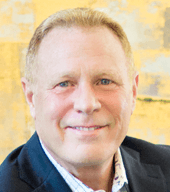
Terrence Metz, president of MG RUSH Facilitation Training, was just 22-years-old and working as a Sales Engineer at Honeywell when he recognized a widespread problem—most meetings were ineffective and poorly led, wasting both time and company resources. However, he also observed meetings that worked. What set them apart? A well-prepared leader who structured the session to ensure participants contributed meaningfully and achieved clear outcomes.
Throughout his career, Metz, who earned an MBA from Kellogg (Northwestern University) experienced and also trained in various facilitation techniques. In 2004, he purchased MG RUSH where he shifted his focus toward improving established meeting designs and building a curriculum that would teach others how to lead, facilitate, and structure meetings that drive results. His expertise in training world-class facilitators led to the 2020 publication of Meetings That Get Results: A Guide to Building Better Meetings, a comprehensive resource on effectively building consensus.
Grounded in the principle that “nobody is smarter than everybody,” the book details the why, what, and how of building consensus when making decisions, planning, and solving problems. Along with a Participant’s Guide and supplemental workshops, it supports learning from foundational awareness to professional certification.
Metz’s first book, Change or Die: A Business Process Improvement Manual, tackled the challenges of process optimization. His upcoming book, Catalyst: Facilitating Innovation, focuses on meetings and workshops that don’t simply end when time runs out but conclude with actionable next steps and clear assignments—ensuring progress beyond discussions and ideas.
