
Scope creep wreaks havoc on projects and group decision-making. Meetings also spin out of control because the leader allows the co-mingling of strategic, operational, AND tactical issues. Each deserves a different approach, preparation, and decision-making. Do NOT allow your meetings to jump back and forth between different issue types.
Many people spend a large portion of the workday attending meetings. Strive to understand the clear purpose of the meeting and what it needs to deliver. All meetings have an effect on group decision-making, or they should not be held. While many meetings appear innocuous, such as staff meetings, people take their learnings and make new decisions based on new information. All meetings should impact group decision-making and the power of choice.
Group Decision-making and Strategy (Planning) Issues
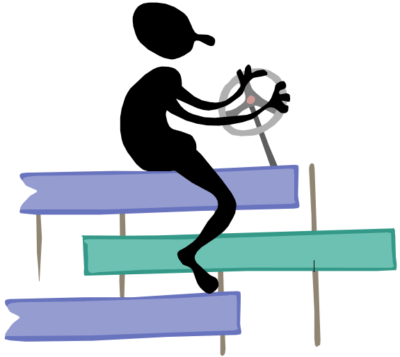
Control Decision-making Method
The input of a strategy session makes clear WHY something is important and the output becomes WHAT we are going to do about it. Most planning sessions are “strategic” to the needs of the group attending because the output is WHO does WHAT.
Most academic approaches strongly encourage a TO-WS (SWOT) analysis to lead to a consensual understanding of WHAT a group of people needs to do to reach their goals (fuzzy) and objectives (SMART). A thorough TO-WS (SWOT) analysis takes hours, not minutes.
Do NOT allow for a discussion of strategic issues during operational updates and other meetings that are organized primarily to share information. Take the strategy issues that arise, document them clearly, and set them aside for discussion during a true planning session when enough time is allowed to digest complex topics.
Likewise, do NOT allow the group to dive into too many details if you are completing strategy or analysis work. Keep the discussion in the abstract (e.g., accelerate vehicle). If the discussion becomes too concrete (e.g., foot on the pedal), you risk incomplete planning or analysis. Do not allow discussions about HOW activities will be performed when the purpose of the meeting is to establish WHAT needs to be done (e.g., acceleration).
Group Decision-making and Operational (Analysis) Issues
Problem-solving might be separated into problems requiring immediate attention and long-range problems that require a complex and perhaps cultural change. Most “immediate” problems focus on satisfying stakeholders at the expense of the supplier or supply chain. Long-term problems lack a sense of urgency resulting in lengthy discussions that remain on topic but lead to shallow or unclear deliverables. The structure provides help for analysis meetings.
Most operational support meetings lack structure. Problem-solving provides a decent example. Participants frequently commit the bias of “solving”. They jump from the problem to the solution and skip the critical step of analysis. For example, if we jump from symptoms to cures, there is a likelihood we will miss something. If however, we structure the meeting to understand all of the possible causes of the symptom and focus discussion on the cause and not the symptom, we will not likely miss something significant. In requirements gathering for example, “poor requirements” are not typically gathered as wrong requirements; rather, they are “poor” because of the things we missed.
Group Decision-making and Tactical (Design) Issues
When pushed into the concrete details of staffing, purchasing, or other work methods, separate the decision criteria from the options. Groups are capable of making higher quality decisions than the smartest person in the group because:
- Representing diverse stakeholder interests generates more robust criteria
- By using diverse subject matter experts, we increase the likelihood that their understanding of causal relationships (i.e., cause and effect) will be captured,
- Groups create more options than aggregating individuals and more options are directly linked to higher quality decisions.
Group Decision-making and Leadership Role
Do not forget to understand your role, style, and relationship when using groups to support decision-making. When you intend to advocate for a specific decision, have someone else facilitate the session. If you are untrained professionally, and the issue is complicated, complex, or politically charged, someone else should facilitate it. If you begin as the facilitator, but someone else emerges as commanding group respect (typically because they exude neutrality), consider turning the session over to them.
Be prudent, no one wants more meetings. They only want results.
______
Meetings must rise above the tiny opening of words and embrace the fullness of human insight—through listening, visuals, stories, numbers, and symbols. The transformation begins not with tools, but in mindset. Leave your ego at the threshold, and step into the structures of meetings that get results.
In a world where everyone can engage in decisions that affect them
______
Lead the Change—One Meeting at a Time
Are you ready to transform how decisions are made, problems are solved, and alignment is built in your organization?
True meeting leadership goes beyond setting an agenda. It requires a facilitator who can navigate complexity, balance voices, and drive toward outcomes with clarity and consensus. Our Professional Meeting Leadership Workshop and facilitation training equips you to do just that—blending human-centric methods with structured analytical tools to foster rigor, inclusivity, and results that stick.
- Practice live.
- Get expert feedback.
- Build confidence that lasts.
Whether your meetings suffer from unclear objectives, disengaged participants, or decision fatigue, this workshop will help you identify the root causes, apply proven facilitation techniques, and emerge as the leader every team needs.
Take the first step today—transform your meetings and magnify your impact.
______
👉 Click here to reserve your seat now.
#facilitationtraining #meetingdesign
Because every meeting should be a catalyst for change—not just another calendar event.
______
And earn up to 40 professional development credits with our facilitation training.
- CDUs (IIBA)
- CLPs (Federal Acquisition)
- PDUs (SAVE International)
- SEUs (Scrum Alliance)
- 4.0 CEUs (General Professions)
______
With Bookmarks no longer a feature in WordPress, we provide the following for your benefit and reference.
- 20 Prioritization Techniques = https://foldingburritos.com/product-prioritization-techniques/
- Creativity Techniques = https://www.mycoted.com/Category:Creativity_Techniques
- Facilitation Training Calendar = https://mgrush.com/public-facilitation-training-calendar/
- Liberating Structures = http://www.liberatingstructures.com/ls-menu
- Management Methods = https://www.valuebasedmanagement.net
- Newseum = https://www.freedomforum.org/todaysfrontpages/
- People Search = https://pudding.cool/2019/05/people-map/
- Project Gutenberg = http://www.gutenberg.org/wiki/Main_Page
- Scrum Events Agendas = https://mgrush.com/blog/scrum-facilitation/
- Speed test = https://www.speedtest.net/result/8715401342
- Teleconference call = https://youtu.be/DYu_bGbZiiQ
- The Size of Space = https://neal.fun/size-of-space/
- Thiagi/ 400 ready-to-use training games = http://thiagi.net/archive/www/games.html
- Visualization methods = http://www.visual-literacy.org/periodic_table/periodic_table.html#
______
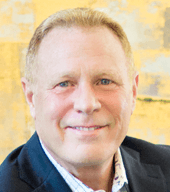
Terrence Metz, president of MG RUSH Facilitation Training, was just 22-years-old and working as a Sales Engineer at Honeywell when he recognized a widespread problem—most meetings were ineffective and poorly led, wasting both time and company resources. However, he also observed meetings that worked. What set them apart? A well-prepared leader who structured the session to ensure participants contributed meaningfully and achieved clear outcomes.
Throughout his career, Metz, who earned an MBA from Kellogg (Northwestern University) experienced and also trained in various facilitation techniques. In 2004, he purchased MG RUSH where he shifted his focus toward improving established meeting designs and building a curriculum that would teach others how to lead, facilitate, and structure meetings that drive results. His expertise in training world-class facilitators led to the 2020 publication of Meetings That Get Results: A Guide to Building Better Meetings, a comprehensive resource on effectively building consensus.
Grounded in the principle that “nobody is smarter than everybody,” the book details the why, what, and how of building consensus when making decisions, planning, and solving problems. Along with a Participant’s Guide and supplemental workshops, it supports learning from foundational awareness to professional certification.
Metz’s first book, Change or Die: A Business Process Improvement Manual, tackled the challenges of process optimization. His upcoming book, Catalyst: Facilitating Innovation, focuses on meetings and workshops that don’t simply end when time runs out but conclude with actionable next steps and clear assignments—ensuring progress beyond discussions and ideas.

Reblogged this on THE STRATEGIC LEARNER and commented:
Yep …