Every minute somewhere, someone refers to Deming’s term SMART (i.e., Specific, Measurable, Achievable, Relevant, Time-Based).
Lesser known, however frequently copied, you will find his philosophy of continuous improvement. Therefore, true to his words, enjoy the phrasing of Deming’s 14 points of continuous improvement. You will discover an excellent discussion of them in Chapter 2 of Out of the Crisis, by W. Edwards Deming, MIT Press, 2000; originally published in 1982.
A few are counter-intuitive but you decide. Consequently, take what you like and leave the rest.
First-half

Deming’s 14 Points — Continuous Improvement Pays for Itself
- Provide for the long-range needs of the company; don’t focus on short-term profitability. The goal is to grow the business and add value.
- The world constantly changes, and managers need to adopt their way of thinking. Delays, mistakes, defective workmanship, and poor service are never acceptable.
- Quit depending on inspections to find defects, and build quality into products and processes as they are built. Use statistical process control to minimize biases.
- Do not choose suppliers on the basis of pricing (e.g., low bids) alone. Minimize total cost by establishing long-term relationships with suppliers that are based on loyalty and trust.
- Work continually to improve customer delivery and service. Improvement is not a one-time effort; every activity in the process must be continually improved to reduce waste and improve quality.
- Institute training because managers should know about modern leadership and be able to train workers to become future leaders. Managers also need training to understand the processes of production, delivery, and customer satisfaction.
- Institute leadership. Managers ought to help people do a better job and remove barriers that keep them from doing their job with pride. The greatest waste in America is failure to use the abilities of people.
Second-half
- Drive out fear. People need to feel secure in order to do their job well. There should never be a conflict between doing what is best for the company and meeting the expectations of their immediate job.
- Break down barriers between departments. Create cross-functional teams so everyone can understand the others’ perspectives. Do not undermine team cooperation by rewarding individual performance.
- Stop using slogans, exhortations, and targets. It is the process, not the workers, that creates defects and lowers productivity. Exhortations don’t change the system; that is management’s responsibility.
- Eliminate numerical quotas for workers and numerical goals for people in management. Also, eliminate arbitrary deadlines for development teams that are managed by fear. Embrace facilitative leadership.
- Eliminate barriers that rob people of their pride in workmanship. Stop treating hourly workers like a commodity. Eliminate annual performance ratings for salaried workers.
- Encourage education and self-improvement for everyone. An educated workforce and management will propel profits in the future.
- Take action to accomplish the transformation. A top management team must lead the effort with action, not simply ‘support’ it.
______
Lead the Change—One Meeting at a Time
Are you ready to transform how decisions are made, problems are solved, and alignment is built in your organization?
True meeting leadership goes beyond setting an agenda. It requires a facilitator who can navigate complexity, balance voices, and drive toward outcomes with clarity and consensus. Our Professional Meeting Leadership Workshop equips you to do just that—blending human-centric methods with structured analytical tools to foster rigor, inclusivity, and results that stick.
- Practice live.
- Get expert feedback.
- Build confidence that lasts.
Whether your meetings suffer from unclear objectives, disengaged participants, or decision fatigue, this workshop will help you identify the root causes, apply proven facilitation techniques, and emerge as the leader every team needs.
Take the first step today—transform your meetings and magnify your impact.
👉 Click here to reserve your seat now.
(Limited availability)
Because every meeting should be a catalyst for change—not just another calendar event.
______
With Bookmarks no longer a feature in WordPress, we provide the following for your benefit and reference.
- 20 Prioritization Techniques = https://foldingburritos.com/product-prioritization-techniques/
- Creativity Techniques = https://www.mycoted.com/Category:Creativity_Techniques
- Facilitation Training Calendar = https://mgrush.com/public-facilitation-training-calendar/
- Liberating Structures = http://www.liberatingstructures.com/ls-menu
- Management Methods = https://www.valuebasedmanagement.net
- Newseum = https://www.freedomforum.org/todaysfrontpages/
- People Search = https://pudding.cool/2019/05/people-map/
- Project Gutenberg = http://www.gutenberg.org/wiki/Main_Page
- Scrum Events Agendas = https://mgrush.com/blog/scrum-facilitation/
- Speed test = https://www.speedtest.net/result/8715401342
- Teleconference call = https://youtu.be/DYu_bGbZiiQ
- The Size of Space = https://neal.fun/size-of-space/
- Thiagi/ 400 ready-to-use training games = http://thiagi.net/archive/www/games.html
- Visualization methods = http://www.visual-literacy.org/periodic_table/periodic_table.html#
- Walking Gorilla = https://youtu.be/vJG698U2Mvo
______
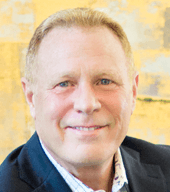
Terrence Metz, president of MG RUSH Facilitation Training, was just 22-years-old and working as a Sales Engineer at Honeywell when he recognized a widespread problem—most meetings were ineffective and poorly led, wasting both time and company resources. However, he also observed meetings that worked. What set them apart? A well-prepared leader who structured the session to ensure participants contributed meaningfully and achieved clear outcomes.
Throughout his career, Metz, who earned an MBA from Kellogg (Northwestern University) experienced and also trained in various facilitation techniques. In 2004, he purchased MG RUSH where he shifted his focus toward improving established meeting designs and building a curriculum that would teach others how to lead, facilitate, and structure meetings that drive results. His expertise in training world-class facilitators led to the 2020 publication of Meetings That Get Results: A Guide to Building Better Meetings, a comprehensive resource on effectively building consensus.
Grounded in the principle that “nobody is smarter than everybody,” the book details the why, what, and how of building consensus when making decisions, planning, and solving problems. Along with a Participant’s Guide and supplemental workshops, it supports learning from foundational awareness to professional certification.
Metz’s first book, Change or Die: A Business Process Improvement Manual, tackled the challenges of process optimization. His upcoming book, Catalyst: Facilitating Innovation, focuses on meetings and workshops that don’t simply end when time runs out but conclude with actionable next steps and clear assignments—ensuring progress beyond discussions and ideas.

Organizations that excel at managing change gain a competitive advantage by being more responsive to market demands, innovating faster, and maintaining high levels of employee satisfaction and engagement.
Agreed. You might want to look at RenDanHeYi, a term popularized by Haier, a leading Chinese multinational consumer electronics and home appliances company, translates roughly to “people, short link, value.” It emphasizes direct interactions between employees and users (customers), aiming to dissolve traditional hierarchical structures and promote an entrepreneurial culture within the organization. The model focuses on creating micro-enterprises within the larger corporate structure, each operating independently and responsively to market demands.