Here is how to develop the basis for a successful meeting framework in four easy steps.
To prepare your meeting framework write down the program purpose, project scope, meeting deliverables, and likely participants.
Develop the Basis for a Successful Meeting Framework in Four Easy Steps
Method
Finish the following:
- Write down your deliverable and strive to Get Examples! Outputs from the meeting represent the needed documentation and crucial information. What are we producing? Next, show participants examples from the past or from other projects if available. Align the output with the group’s strategic plan to help reconcile any trade-offs that may need to be made in the meeting.
- Measure the impact of the meeting on the program and write down the project scope. Identify the level of detail desired, the type of session (planning, problem-solving, design, etc.), and what must be DONE during the meeting. Furthermore, clarify what might be excluded (due to scope) or what the meeting purpose and meeting scope are NOT.
- Draft and compose the agenda steps that enable you to sequence the information that is needed. Identify the missing information that you need to produce the deliverables. Rely on your group’s meeting design or life cycle. The best sources and sequence for your draft agenda include the following:
- In-house life cycle (e.g., SAFe)
- Team charter, prior work, or MGRUSH agendas to plan, analyze, solve, or design.
- Experience—look at past meetings (or CoP; i.e., a community of practice), and ask, “What questions need to be answered to satisfy the purpose of the meeting?” Look at the questions built during the interviews.
- Talk to the project manager, other partners (i.e., the product owner), or other group experts.
- Go to a library or bookstore but do NOT rely on Google® alone for intellectual property.
THE THREE STEPS ABOVE YIELD A STRAW MODEL OR SIMPLE MEETING FRAMEWORK
For Lean or Agile also consider
– Existing enterprise systems or processes (life cycle)
– Architecture infrastructure (consider drafting a baseline architectural pattern)
– Scoping/ phasing (what high-level information is known)
– Consider existing process models, high-level ERD, and actors’ security/ policy
- Identify the most appropriate participants. Identify what knowledge or expertise each needs to bring to the workshop. Determine how much of the agenda the participants understand and can reasonably complete in a group environment. Identify what issues they have—do they need team-building or creativity or some management of behavior? Find someone who will provide resistance at the meeting so that you can learn to anticipate challenges that will develop. You may not want to avoid the issues because they need to surface; however, you do not want to be surprised or caught off guard.
Walk through the steps to see if you can produce the desired results with the proposed participants. Do the steps allow the group to build on prior work without jumping around? Are the steps logical? Will the deliverables be comprehensive?
NOTE: Identify the known information at the start of the proposed workshop. Because some information was probably built before this workshop. It may be output from prior workshops. It may be planning or scope documents. Therefore, this information should only be reviewed and not built from scratch, if acceptable.
______
Lead the Change—One Meeting at a Time
Are you ready to transform how decisions are made, problems are solved, and alignment is built in your organization?
True meeting leadership goes beyond setting an agenda. It requires a facilitator who can navigate complexity, balance voices, and drive toward outcomes with clarity and consensus. Our Professional Meeting Leadership Workshop equips you to do just that—blending human-centric methods with structured analytical tools to foster rigor, inclusivity, and results that stick.
- Practice live.
- Get expert feedback.
- Build confidence that lasts.
Whether your meetings suffer from unclear objectives, disengaged participants, or decision fatigue, this workshop will help you identify the root causes, apply proven facilitation techniques, and emerge as the leader every team needs.
Take the first step today—transform your meetings and magnify your impact.
👉 Click here to reserve your seat now.
(Limited availability)
Because every meeting should be a catalyst for change—not just another calendar event.
______
With Bookmarks no longer a feature in WordPress, we provide the following for your benefit and reference.
- 20 Prioritization Techniques = https://foldingburritos.com/product-prioritization-techniques/
- Creativity Techniques = https://www.mycoted.com/Category:Creativity_Techniques
- Facilitation Training Calendar = https://mgrush.com/public-facilitation-training-calendar/
- Liberating Structures = http://www.liberatingstructures.com/ls-menu
- Management Methods = https://www.valuebasedmanagement.net
- Newseum = https://www.freedomforum.org/todaysfrontpages/
- People Search = https://pudding.cool/2019/05/people-map/
- Project Gutenberg = http://www.gutenberg.org/wiki/Main_Page
- Scrum Events Agendas = https://mgrush.com/blog/scrum-facilitation/
- Speed test = https://www.speedtest.net/result/8715401342
- Teleconference call = https://youtu.be/DYu_bGbZiiQ
- The Size of Space = https://neal.fun/size-of-space/
- Thiagi/ 400 ready-to-use training games = http://thiagi.net/archive/www/games.html
- Visualization methods = http://www.visual-literacy.org/periodic_table/periodic_table.html#
- Walking Gorilla = https://youtu.be/vJG698U2Mvo
______
Related video
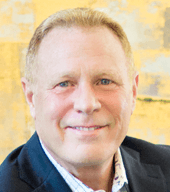
Terrence Metz, president of MG RUSH Facilitation Training, was just 22-years-old and working as a Sales Engineer at Honeywell when he recognized a widespread problem—most meetings were ineffective and poorly led, wasting both time and company resources. However, he also observed meetings that worked. What set them apart? A well-prepared leader who structured the session to ensure participants contributed meaningfully and achieved clear outcomes.
Throughout his career, Metz, who earned an MBA from Kellogg (Northwestern University) experienced and also trained in various facilitation techniques. In 2004, he purchased MG RUSH where he shifted his focus toward improving established meeting designs and building a curriculum that would teach others how to lead, facilitate, and structure meetings that drive results. His expertise in training world-class facilitators led to the 2020 publication of Meetings That Get Results: A Guide to Building Better Meetings, a comprehensive resource on effectively building consensus.
Grounded in the principle that “nobody is smarter than everybody,” the book details the why, what, and how of building consensus when making decisions, planning, and solving problems. Along with a Participant’s Guide and supplemental workshops, it supports learning from foundational awareness to professional certification.
Metz’s first book, Change or Die: A Business Process Improvement Manual, tackled the challenges of process optimization. His upcoming book, Catalyst: Facilitating Innovation, focuses on meetings and workshops that don’t simply end when time runs out but conclude with actionable next steps and clear assignments—ensuring progress beyond discussions and ideas.
