Whether you’re facilitating a complex meeting or a daily standup, if your meeting participants don’t trust you (or your methods), they will not trust the meeting results.
Robin Dreeke, of People Formula, led the FBI’s Counterintelligence Behavioral Analysis Program. Tips in his book[1], “It’s Not All About Me: The Top Ten Techniques for Building Quick Rapport with Anyone” speak loud and clear to professional facilitators. Below, we’ll examine a few of his recommended techniques for building trust.

Know What Done Looks Like
“The first step in the process of developing great rapport and having great conversations is letting the other person know that there is an end in sight, and it is really close.”
Whether you come from an Agile mindset or waterfall background, leadership begins with a line of site. You must know where you are going. When you don’t, everyone senses that you are groping and lost. Trust begins with the willingness to follow a leader who knows where they are going.
Become Non-verbally Appealing
“When you walk into a room with a bunch of strangers, are you naturally drawn to those who look angry and upset or those with smiles and laughing? Smiling is the number one nonverbal technique you should utilize to look more accommodating.”
Trust should not be assumed, but it can be earned. Your non-verbal and para-verbal signaling is more important than word choice if you want to build trust. You can’t say one thing but display something else. In addition to human connection methods such as empathy, seeking to understand, and avoiding judgments, consider the following:
-
- Tilt your head a bit to the side so you don’t run the risk of looking straight down on people.
- Stand at an angle or a bit to the side and avoid being ‘front and center’ too much. You want to give people visual access to the front and center, whether it’s an easel, screen, or whiteboard. We call this area W.I.P. or the work-in-progress area. When that work is finished, move it to the side for the next content that belongs front and center, not you.
- And of course, smile (sincerely).
Slower Rate of Speech
Research has shown that rapidly speaking in certain situations can increase credibility and even make you sound more intelligent. The goal, however, when meeting new people is to make them feel comfortable. To accomplish this we are better off speaking slower than normal and pausing at times to give people space to absorb what we are saying.
Educators understand Cognitive Load Theory suggesting that any learning experience has three components: 1. Intrinsic load, 2. Germane load, and 3. Extraneous load. Of course, if I say much more on this topic, you will rightfully accuse me of causing cognitive overload. Therefore, if you want more on this topic, I recommend “Effective Education Videos” (I know, ironic eh — an article on videos).
Put on Your Sweater (Hide Rank)
Putting your ego aside and focusing solely on the wants, needs, and opinions of people around you isn’t always easy. But being non-judgmental builds trust.
According to Robin Dreeke, “People who allow others to continue talking without taking their own turn are generally regarded as the best conversationalists.”

Facilitate each topic as a learning opportunity. Seek out the stories of others. Remind yourself that good things happen when we prioritize our two ears over our ego.
Listening Builds Trust
Listening skills build trust quickly, so learn to put your own agenda on hold. We all have agendas. The key to building trust with people, however, is to put our own wants, needs, dreams, and opinions on hold to better learn about the person we are speaking with. After all, the most valuable people take the time to understand what other people value.
As Robin Dreeke says — “When the focus is on the other person and we’re not anxious to tell our own story, we also tend to remember the details. We’re mindful.”
Thoughtfulness
Thoughtfulness doesn’t have to be a big thing. Little gestures like offering a participant who is coughing a cup of water, a mint, a tissue, or even hand sanitizer can go a long way in building trust and rapport.
Questioning
“Once the individual being targeted supplies more words and thoughts, a great (facilitator) will utilize the content given and continue to ask open-ended questions about the same content.”
Focus Builds Trust
According to Robin Dreeke, one of the most reliable trust-builders is our “focus.” After all, as human beings, we frequently prefer different things. One thing we have in common is that we love to know that our voice is being heard and we are truly seen.
Below are five Best Practices articles that reinforce the basis of trust and support the topics we spoke of above.
- How to Ensure Neutral Facilitation
- Nonverbal Expressions: How to (Not) Gesture while Facilitating
- Seven Top Skills for Managing Change in an Enterprise or Organization
- The Servant Leader Solution Benefits Everyone
- Thoughts, Words, and Deeds – Foundation for Building Consensus
Remember, nobody is smarter than everybody.
~~~~~~~~~~~~
[1] Adapted from “According to an FBI Behavior Expert, These 10 Techniques Quickly Build Trust with Anyone, by Michael Thompson, Personal Growth, Medium
In a world where everyone can engage in decisions that affect them
______
Lead the Change—One Meeting at a Time
Are you ready to transform how decisions are made, problems are solved, and alignment is built in your organization?
True meeting leadership goes beyond setting an agenda. It requires a facilitator who can navigate complexity, balance voices, and drive toward outcomes with clarity and consensus. Our Professional Meeting Leadership Workshop and facilitation training equips you to do just that—blending human-centric methods with structured analytical tools to foster rigor, inclusivity, and results that stick.
- Practice live.
- Get expert feedback.
- Build confidence that lasts.
Whether your meetings suffer from unclear objectives, disengaged participants, or decision fatigue, this workshop will help you identify the root causes, apply proven facilitation techniques, and emerge as the leader every team needs.
Take the first step today—transform your meetings and magnify your impact.
👉 Click here to reserve your seat now.
#facilitationtraining #meetingdesign
Because every meeting should be a catalyst for change—not just another calendar event.
______
With Bookmarks no longer a feature in WordPress, we provide the following for your benefit and reference.
- 20 Prioritization Techniques = https://foldingburritos.com/product-prioritization-techniques/
- Creativity Techniques = https://www.mycoted.com/Category:Creativity_Techniques
- Facilitation Training Calendar = https://mgrush.com/public-facilitation-training-calendar/
- Liberating Structures = http://www.liberatingstructures.com/ls-menu
- Management Methods = https://www.valuebasedmanagement.net
- Newseum = https://www.freedomforum.org/todaysfrontpages/
- People Search = https://pudding.cool/2019/05/people-map/
- Project Gutenberg = http://www.gutenberg.org/wiki/Main_Page
- Scrum Events Agendas = https://mgrush.com/blog/scrum-facilitation/
- Speed test = https://www.speedtest.net/result/8715401342
- Teleconference call = https://youtu.be/DYu_bGbZiiQ
- The Size of Space = https://neal.fun/size-of-space/
- Thiagi/ 400 ready-to-use training games = http://thiagi.net/archive/www/games.html
- Visualization methods = http://www.visual-literacy.org/periodic_table/periodic_table.html#
______
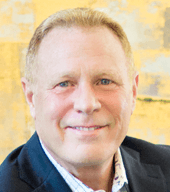
Terrence Metz, president of MG RUSH Facilitation Training, was just 22-years-old and working as a Sales Engineer at Honeywell when he recognized a widespread problem—most meetings were ineffective and poorly led, wasting both time and company resources. However, he also observed meetings that worked. What set them apart? A well-prepared leader who structured the session to ensure participants contributed meaningfully and achieved clear outcomes.
Throughout his career, Metz, who earned an MBA from Kellogg (Northwestern University) experienced and also trained in various facilitation techniques. In 2004, he purchased MG RUSH where he shifted his focus toward improving established meeting designs and building a curriculum that would teach others how to lead, facilitate, and structure meetings that drive results. His expertise in training world-class facilitators led to the 2020 publication of Meetings That Get Results: A Guide to Building Better Meetings, a comprehensive resource on effectively building consensus.
Grounded in the principle that “nobody is smarter than everybody,” the book details the why, what, and how of building consensus when making decisions, planning, and solving problems. Along with a Participant’s Guide and supplemental workshops, it supports learning from foundational awareness to professional certification.
Metz’s first book, Change or Die: A Business Process Improvement Manual, tackled the challenges of process optimization. His upcoming book, Catalyst: Facilitating Innovation, focuses on meetings and workshops that don’t simply end when time runs out but conclude with actionable next steps and clear assignments—ensuring progress beyond discussions and ideas.