We have learned during facilitated meetings and workshops, that it’s not easy for participants to respond to broad questions like “How do you solve global hunger?” While meaningful, the question’s scope is too broad (and perhaps vague) to stimulate specific, actionable (ie, SMART) responses like “We could convert eight abandoned mine shafts in Somalia to create temperature controlled food storage areas.” To improve group clarity, use the following.
Extemporaneous leaders have a tendency to transition during meetings with broad questions like, “Are we OK with this list?”, “Can we move on?”, or “Anything else?”. Facilitate with structure and precision by modifying your transitions with these three questions, adapted to your own situation:
- Do we need to clarify anything? (scrub for clarity)

- Do we need to delete anything? (scrub for relevancy or redundancy)
- Do we need to add anything to this list? (scrub for omissions)
The three detailed questions make it easier for meeting participants to analyze, agree, and move on.
______
Don’t ruin your career or reputation with bad meetings. Register for a workshop or forward this to someone who should. MGRUSH professional facilitation workshops focus on practice. Each participant thoroughly practices and rehearses tools, methods, and approaches throughout the week. While some call this immersion, we call it the road to building impactful facilitation skills.
Related articles
- Punctuation Precision, Humorously Proven by “Eats, Shoots & Leaves” (mgrush.com/blog)
- 40 Proven Questions to Determine and Mitigate Meeting or Workshop Risk (1 of 5) (mgrush.com/blog)
- You Can Effectively Facilitate a Group of People With These Three Principles (mgrush.com/blog)
- SCAMPER is a Mnemonic to Prompt for Excellent, Impromptu Questions (mgrush.com/blog)
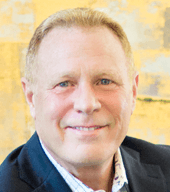
Terrence Metz, president of MG RUSH Facilitation Training, was just 22-years-old and working as a Sales Engineer at Honeywell when he recognized a widespread problem—most meetings were ineffective and poorly led, wasting both time and company resources. However, he also observed meetings that worked. What set them apart? A well-prepared leader who structured the session to ensure participants contributed meaningfully and achieved clear outcomes.
Throughout his career, Metz, who earned an MBA from Kellogg (Northwestern University) experienced and also trained in various facilitation techniques. In 2004, he purchased MG RUSH where he shifted his focus toward improving established meeting designs and building a curriculum that would teach others how to lead, facilitate, and structure meetings that drive results. His expertise in training world-class facilitators led to the 2020 publication of Meetings That Get Results: A Guide to Building Better Meetings, a comprehensive resource on effectively building consensus.
Grounded in the principle that “nobody is smarter than everybody,” the book details the why, what, and how of building consensus when making decisions, planning, and solving problems. Along with a Participant’s Guide and supplemental workshops, it supports learning from foundational awareness to professional certification.
Metz’s first book, Change or Die: A Business Process Improvement Manual, tackled the challenges of process optimization. His upcoming book, Catalyst: Facilitating Innovation, focuses on meetings and workshops that don’t simply end when time runs out but conclude with actionable next steps and clear assignments—ensuring progress beyond discussions and ideas.

Reblogged this on Gr8fullsoul.