
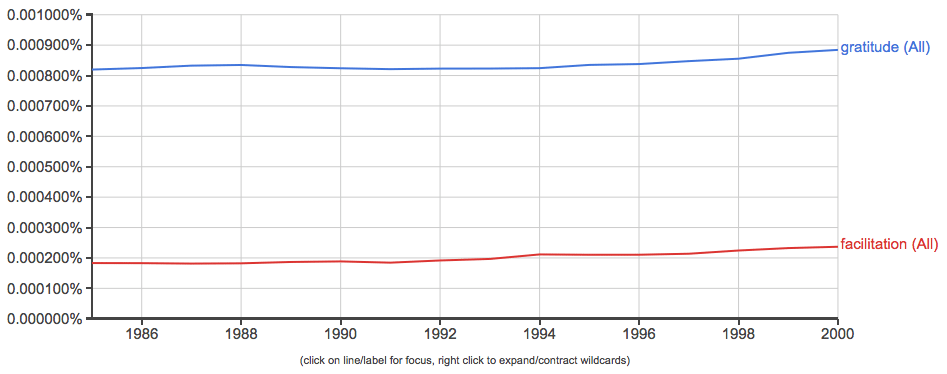
Attitude of Gratitude Makes for More Powerful Facilitation
The evidence is overwhelming—those who have more gratitude, or an attitude of gratitude --- are happier individuals. Although you won’t hear the term ‘happy’ very frequently in one of our meetings or workshops (because the word is both subjective...
A Quick, 5-Minute Paradigm Exercise to Challenge Groupthink
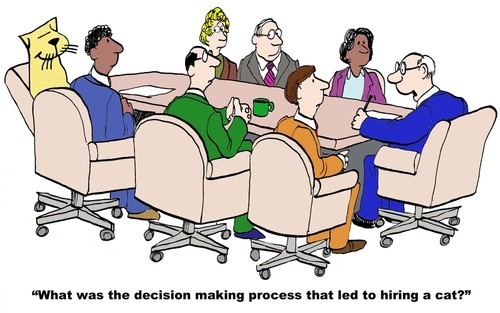
We encourage professional facilitators to carry a toolbox. Include some intervention devices when you need to shake up your participants. Be prepared to challenge groupthink if you start hearing things like . . . That will never change. We don’t do...

Process Improvement Questions to Ask When Leading an Initiative
Organizational process improvement questions depend on the points of view. From an executive perspective, fewer participants and lower costs indicate process improvement. However, from an employee or member point of view, getting more done quickly...

To Lead Faster Meetings Requires Explaining the White Space, the WHY Before the WHAT
To effectively control your meetings and finish faster meetings (ahead of schedule) requires an effort that begins long before your meeting starts. We call the preparation period 7:59 work, as in before 8:00 AM. After the meeting starts, you can...
How to Facilitate Olympic Scoring – Innovative Ideas & Concepts
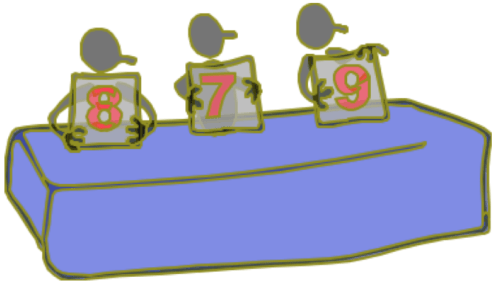
The Purpose of Olympic Scoring is to extract some consensually validated new product, process, or other innovative ideas or concepts while encouraging 100 percent participation. The following is particularly appropriate when facilitating Olympic...
Twenty Popular Brain Teasers to Stimulate Meeting Participants
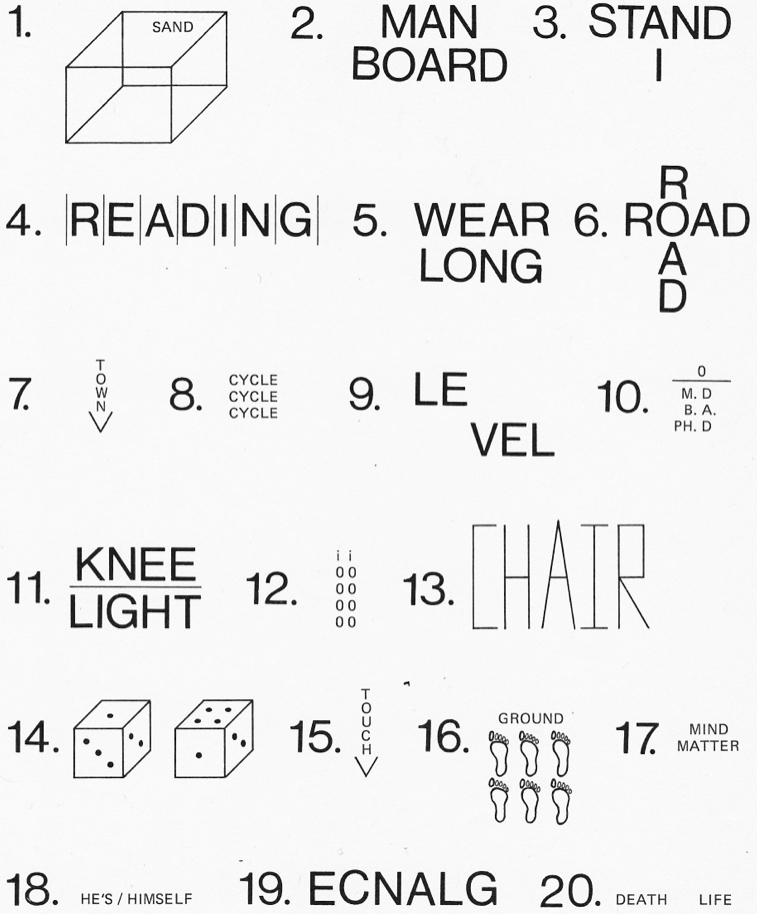
Here are twenty common examples of Brain Teasers followed by some narrative challenges and sports test. Our MGRUSH Facilitative Leadership and Facilitator Workshop alumni have digital rights to access thousands of Brain Teasers (or, Brain Breaks/...
How to Make Thinking Visible — Three Forms of Business Argumentation Support
The main reason for categorizing input relies on a common purpose. Most groups gather around a common purpose. For example, treasury groups gather their departments around financial capital. While human resources gather their departments around...

Methodological Awareness About Deming’s 14 Points of Continuous Improvement
Every minute somewhere, someone refers to Deming’s term SMART (i.e., Specific, Measurable, Achievable, Relevant, Time-Based). Lesser known, however frequently copied, you will find his philosophy of continuous improvement. Therefore, true to his...
Appreciate the Value of Argumentation and Meeting Argumentation
A strong facilitator should understand and appreciate the value of argumentation, specifically meeting argumentation. She should understand the holarchial nature of business and align people organized around a common cause. Critical thinking helps...

Fun, Quick, and Effective Icebreakers for Large Groups (and Small Ones Too)
All groups, especially very large groups, perform better when the participants know something about each other. Even though time constraints prohibit traditional, self-spoken icebreakers for large groups (e.g., 60 people for two minutes each burns...

Develop the Basis for a Successful Meeting or Workshop in Four Easy Steps
Here is how to develop the basis for a successful meeting framework in four easy steps. To prepare your meeting framework write down the program purpose, project scope, meeting deliverables, and likely participants. Method Finish the following:...

Appreciative Inquiry — A Facilitative Path for the Future
Organizations seeking to change HOW they work use consider Appreciative Inquiry. The Appreciative Inquiry approach evaluates various viewpoints to create an evolutionary path for the future. It leverages brainstorming, prioritizing, sub-teams, and...

Values Provide and Answer to Who are We ? — Benjamin Franklin Called Them Virtues
We always find it interesting that consulting firms promulgate their own, unique operational definitions. For instance, the term ‘values’ can be found called many things including “Guiding Principles”, “Tenets of Operation”, “Virtues”, “Essential...
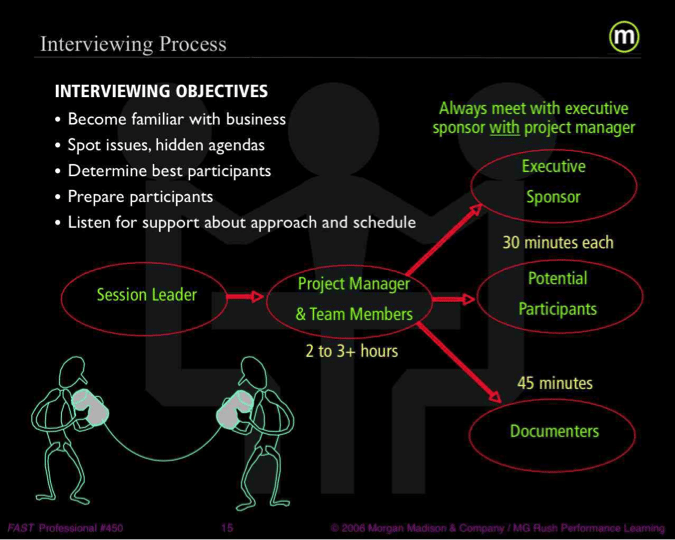
Interviewing Questions to Ask to Understand Political Risks in Meetings
Interview participants to understand as much as possible about them, the people they work with, and their business. To understand the political risks in meetings, speak with your participants. Preferably, sit with them one-on-one for about 30...

Facilitate: Indispensable in Guide to the Business Analyst Body of Knowledge ®
How to run a better meeting is like learning to be a better listener, easy to understand but hard to do. Why? Poor muscle memory. What can we do about it? Change our muscle memory. While perfect practice remains the best way to overcome poor muscle...
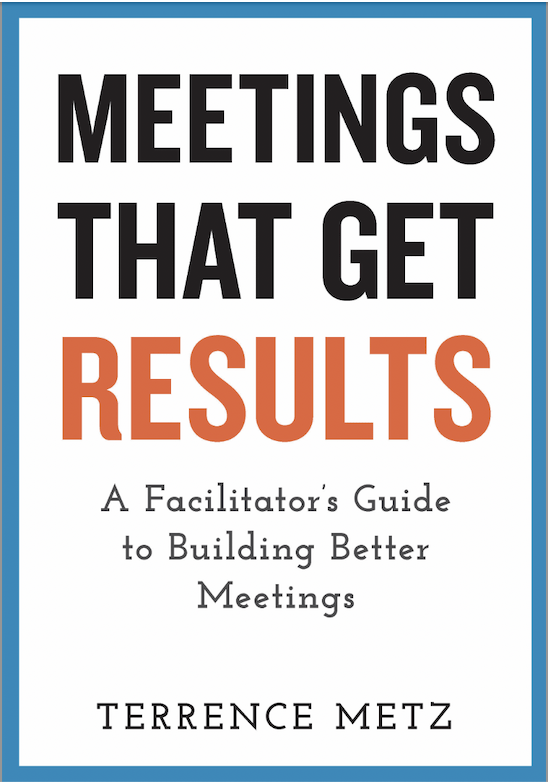
Stop wasting time and money!
With Meetings That Get Results, you’ll learn how to lead meetings that produce clear and actionable results every time. More important, how to avoid the worst possible outcome from any meeting—another meeting!
Developed from over 17+ years of research, delivery, and practice, including 15,000+ hours providing live instruction using Certified curriculum, Meetings That Get Results provides you with the tools and methods necessary to lead meetings that generate clear and actionable results, with deliverables that participants both understand and own.
“An essential handbook for any leader or facilitator of meetings. Especially as we have transitioned to more remote-based collaboration, I value all the tips to lead global team meetings.”
— Sana A. Manjeshwar, Global Principal Ombuds Manager, Chevron